
Production floors, overheads, amenities
Factory Cleaning in Melbourne
We handle factory cleaning in Melbourne for manufacturers that run one, two or three shifts: production floor perimeters, overhead structures, change rooms, lunchrooms and the office block, all worked into the gaps your shifts leave. It is written for factory, operations and HR managers who want the whole building looked after by one crew instead of three separate contractors. Factory work is one of the ten warehouse and industrial services we offer, and it is usually booked as an ongoing program.
Factories get dirty faster than warehouses and have more people using the amenities, so the plan leans on frequency rather than big one-off cleans.
Factories we look after
- ASSYAssembly
- PACKPackaging
- FABFabrication
- MIXBlending
- Shift-aware visits planned with your production lead
- Colour-coded equipment so zones never share cloths
- Same crew on your factory each week
- Lockout rules followed without exception
How does factory cleaning fit around production shifts?
Factory cleaning in Melbourne works in the gaps between shifts, overnight when the plant is idle, and during changeovers and shutdowns. The more shifts you run, the more the work is split into small zones cleaned in short windows.
Changeovers are worth planning around too. When a line switches product, there is often a gap of an hour or two while it is set up again. We can use that gap for the floor around that line, so the next run starts on a clean perimeter.
Pick your shift pattern to see where cleaning usually lands. Most suburban factories, from Dandenong South to Campbellfield, run one of these three, and each gives us a different kind of window.
The easiest pattern. The whole plant is free after knock-off, so the crew arrives mid-afternoon and has the floor, amenities and offices to itself. Deeper work can run on Saturday without touching production at all.
The most common pattern we see. Cleaning runs overnight between the afternoon knock-off and the morning start. Amenities get a quick midday check on busy sites, because two shifts put twice the load on the change rooms.
No quiet night at all. We clean amenities and offices during each shift, and production zones one at a time when their line stops for maintenance or a changeover. Heavy work waits for the planned shutdown.
How are production floors and perimeters cleaned?
The walkways and the band around each line are cleaned every visit, because that is where people walk and product drops. The floor under the machines is done when the line is isolated, not squeezed in while it runs.
A factory floor is really several floors. The aisles behave like a warehouse, the area around each line collects offcuts and residue, and the loading end takes grit from every truck. We treat them as separate zones with their own cycle.
| Zone | What builds up | How often | Method |
|---|---|---|---|
| Walkways and aisles | Dust, packaging scraps, tracked-in grit | Every visit | Sweep and machine scrub |
| Line perimeters | Offcuts, drips, product residue | Every visit | Vacuum, spot degrease, scrub |
| Under and beside machines | Oil, swarf, dropped parts | When isolated, weekly to monthly | Hand clean and recovery scrub |
| Receiving and dispatch | Road grit, wrap, pallet splinters | Every visit | Sweep, scrub, dock plates by hand |
| Waste and recycling bays | Spills, odour, loose rubbish | Weekly | Pick up, wash down, bin bay scrub |
Spills during a shift are your team's to deal with straight away, using your spill kits. What we add is the follow-up: the scrub that removes the residue left after a quick mop, and a note on the report when the same spot keeps getting spilt on, which usually points to a leaking fitting or a bad transfer point.
Older factories in the inner suburbs, such as Richmond, Collingwood and Brunswick, often have timber or patched concrete floors that cannot take a heavy scrubber. We use lighter machines and less water there, and say so in the quote.
What about overhead structures and services?
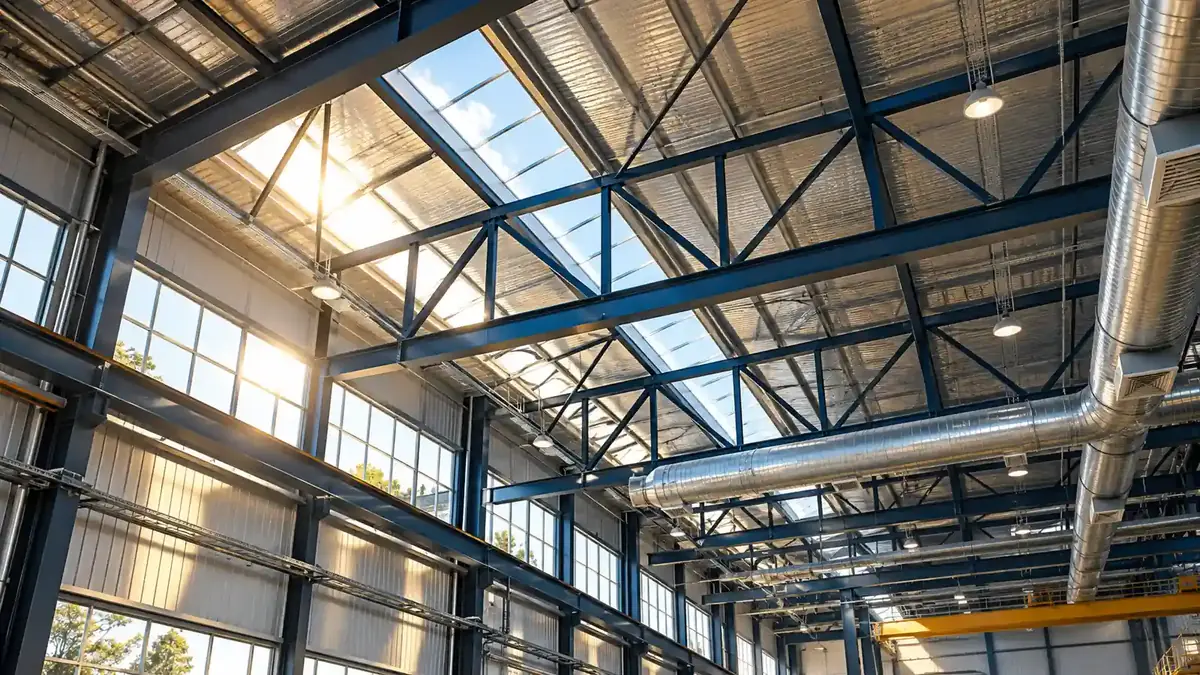
Overheads are cleaned during shutdowns or planned stops, once or twice a year for most factories. Ducts, cable trays, lights and roof steel are vacuumed from lifts while production is locked out below.
Overhead dust in a factory tends to fall back onto the line. On packaging and assembly sites that means rejects and rework, so the timing of the overhead clean matters as much as the clean itself. We book it at the start of a shutdown and scrub the floor last.
Air and extraction ducting collects a fine grey layer on its top face. We vacuum the outside; internal duct cleaning is a specialist trade.
Cable trays and conduit runs over the line are vacuumed with care, never wet cleaned, and nothing is disconnected or moved.
Rafters, purlins and mezzanine undersides, cleaned bay by bay from scissor or boom lifts with the area below closed.
If you do not have a shutdown in the calendar, a long weekend works well. We can do the overheads over two nights and the floor on the third, so Monday starts with the whole building done. Tell us early, because long weekends before Christmas and Easter book out first.
The full method for dust at height is on our page about deep cleaning and dust removal at height.
How often do factory amenities, lunchrooms and change rooms need cleaning?
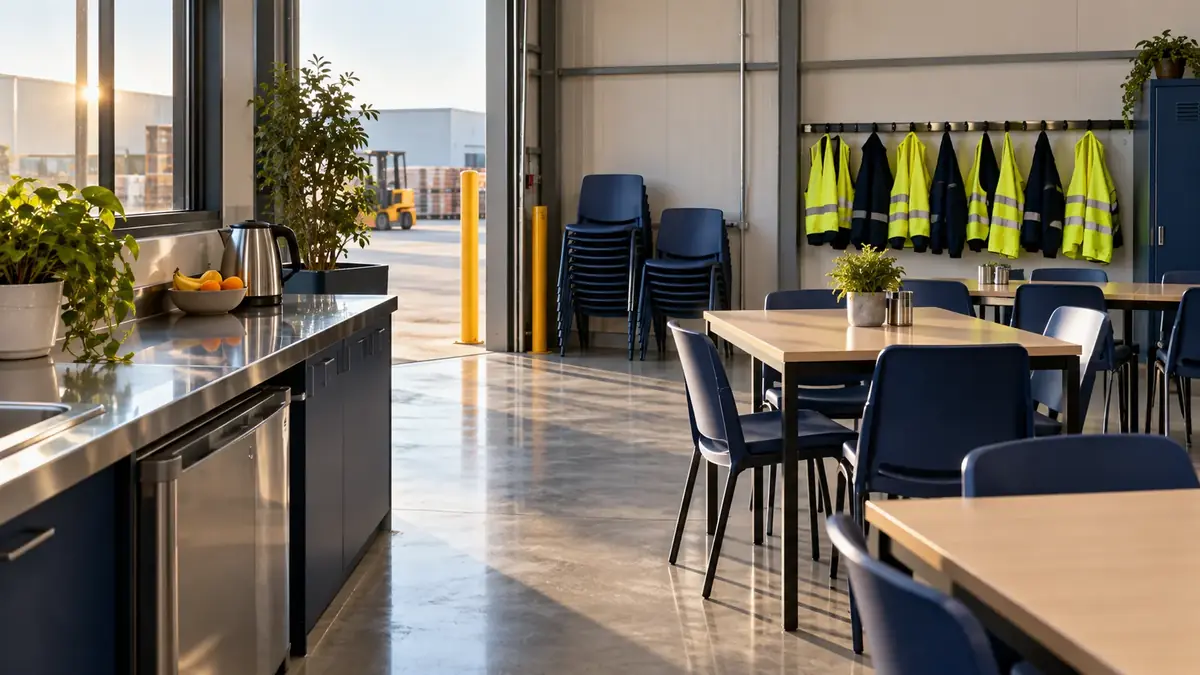
At least once a day, and once per shift on sites with two or more shifts or more than about 40 people each shift. Amenities are used hard in factories, and they are what your staff judge the whole cleaning contract on.
A factory change room sees work boots, overalls, showers and lockers every shift. The lunchroom takes food, microwaves and fridges for the whole workforce. Leave either for a day and people notice before lunch.
| People per shift | Toilets and showers | Lunchroom |
|---|---|---|
| Under 20 | Daily | Daily |
| 20 to 40 | Daily, plus a midday check | Daily, fridge weekly |
| Over 40 | Once per shift | After each main break |
WorkSafe Victoria's compliance code on workplace amenities covers how facilities like toilets, change rooms and dining areas should be maintained and kept clean. A daily or per-shift cycle is how most factories meet it in practice.
Consumables such as soap, hand towel and toilet paper are restocked every visit, and we can supply them or use yours. Damage, leaks and broken fittings are reported on the visit report the same day.
How do you stop dirt moving between zones?
By colour-coding cloths, mops and buckets so equipment from one zone never touches another, and by cleaning from the cleanest area towards the dirtiest. If your factory already has a colour code, we follow yours.
The code below is a common one. What matters is that toilet equipment never reaches the lunchroom, and production grease never reaches the offices. Crews are shown the code at induction, and it is written into the SWMS.
Red
Toilets and urinals. Highest risk, cleaned last in the amenity block with its own equipment.
Yellow
Basins, showers and change room surfaces, kept apart from toilet equipment.
Blue
Offices, meeting rooms and general areas, cleaned first because they are the cleanest.
Green
Lunchrooms, kitchens and anywhere food is handled or eaten.
Production zones get their own dedicated scrubber pads and mop heads as well. On food or packaging sites with a stricter hygiene plan, we match the plan exactly and keep the records it asks for.
Is the factory office block part of the same clean?
Yes. Reception, offices, meeting rooms and the site's own kitchen are cleaned by the same crew on the same visits, usually first each night because they are the cleanest part of the building.
Keeping the office inside the factory contract saves you managing a second cleaner with a second set of keys, inductions and invoices. It also means the office team and the floor team see the same standard, which avoids the familiar complaint that "the office gets done properly and the lunchroom doesn't".
Visitor areas get extra attention before customer tours or audits. Tell us the date and we move a deeper office and reception clean to the night before.
- Reception and visitor areas dusted, floors mopped, glass cleaned
- Offices and meeting rooms bins, desks cleared of dust, carpet vacuumed
- Staff kitchen benches, sink, microwave and fridge handles
- Toilets and first aid room cleaned with the red and yellow kit
- Entry mats and doors so floor grit is not walked into the office
- Printer and archive rooms dusted on a monthly cycle
Why do most factories run a cleaning program instead of one-off cleans?
Because factory dirt never stops arriving. A program sets daily, weekly, monthly and shutdown tasks in writing, prices them as one monthly figure, and keeps the plant at the same standard every week instead of swinging between dirty and clean.
One-off cleans still have their place, usually before an audit, a customer visit or a new contract. For everything else, a layered program costs less over a year and is easier to manage.
Amenities, lunchroom, rubbish, spill checks on walkways
Production floor scrub, line perimeters, offices, waste bays
Under-machine cleans on isolation, edges, walls to reach, doors and tracks
Overheads, roof steel, lights, deep degrease of the whole floor
How a program is set up, reported and reviewed is explained on our page about ongoing cleaning programs for plants and warehouses. Plants with heavy process soil, rather than general factory dirt, should also read about our industrial cleaning for heavy production sites.
Where in Melbourne do you clean factories?
Across metropolitan Melbourne, with most factory work in the south-east around Dandenong South and Braeside, the north through Campbellfield and Thomastown, and the western estates from Laverton North to Derrimut.
Each area has its own kind of factory. The south-east has large manufacturing and food plants, the north mixes fabrication, automotive parts and food distribution, and the inner suburbs still have older brick factories converted to light manufacturing and workshops. We plan crews by area, so the same people keep coming back to your plant.
How do you get a factory cleaning quote?
Tell us your shift pattern, headcount per shift, floor area and what the factory makes. After a walk-through we send a fixed monthly price for the program, with any shutdown cleans priced as separate lines.
Headcount matters more than most people expect, because it drives how often the amenities need attention. If you can, bring your safety or hygiene lead to the walk-through so the zoning and colour code are agreed on the spot. The factors behind the price are set out on our warehouse and factory cleaning rates page.
Quote my factoryMany of the factories we clean sit in the Dandenong South manufacturing belt. For the wider service, see warehouse and factory cleaning across Melbourne.
- Shift pattern, headcount, floor area and products made
- Walk-through with your production or safety lead
- Fixed monthly program price, shutdown work itemised
- Induction, colour code agreed, first week scheduled
What do managers ask about factory cleaning in Melbourne?
The three questions below come up in almost every factory quote.
Got a question about your own line or layout? Add it to the quote request and the supervisor will cover it on site.