
Compliance guide, reviewed September 2026
Warehouse Dust, Housekeeping and Safety Compliance
Warehouse housekeeping and safety go together under Victorian law: an employer has to keep the workplace in a safe condition, and a tidy floor, clear exits and controlled dust are a big part of that. This guide is for site managers, safety officers and facility managers who want to know what that duty means on a real warehouse floor, where dust becomes more than a looks problem, and what to keep on file. It is written in plain English, not legal advice, and belongs to our practical guides for warehouse and facility managers.
Every legal point links to the official Victorian source, checked at the review date.
What this guide covers
- DUTYThe law
- FLRSlips
- DUSTUp high
- FILERecords
- Written from
- Site work and safety walks on Melbourne warehouses
- Last reviewed
- September 2026
- Next review
- Early 2027, sooner if the rules change
- Sources
- WorkSafe Victoria and Victorian legislation, linked
Are warehouse housekeeping and safety legally linked in Victoria?
Yes. Warehouse housekeeping and safety are linked by the Occupational Health and Safety Act 2004, which requires employers to keep a workplace safe and without risks to health so far as is reasonably practicable. WorkSafe Victoria gives clear exits and a generally tidy worksite as examples of that duty.
WorkSafe's summary of your legal duties under OHS law puts it in everyday terms, while the Act itself is published on the Victorian legislation site. There is no rule saying how often to sweep. The test is whether the site is kept safe.
The employer, and those in control
The duty sits with the business running the site, and with anyone who manages or controls the workplace. Using a cleaning contractor does not hand the duty over; it is one way of meeting it.
The whole working environment
Floors, walkways, exits, lighting, amenities and the way work is done, including cleaning work itself, which can create its own hazards if it is done badly.
Reasonably practicable
What is known about the risk, how likely and serious it is, and what can be done about it. A known, cheap fix for a common hazard is hard to argue against.
Amenities have their own guidance. The WorkSafe compliance code on amenities and the work environment covers toilets, washing facilities, dining areas and the general condition of the workplace, including keeping them clean. It is the document most safety auditors have in mind when they walk into a lunchroom.
How do floors cause most housekeeping injuries?
Through slips, trips and falls. Wet or oily patches, dust on smooth concrete, stretch wrap and strapping in walkways, and worn line marking that no longer shows where forklifts run are the everyday hazards a housekeeping program exists to control.
WorkSafe's guidance on preventing slips, trips and falls names good housekeeping, prompt spill clean-up and well-maintained floor surfaces among the main controls. Each is cheap compared with an injury claim.
Timing matters as much as method. A floor mopped in the middle of a shift, with people and forklifts still moving, can be more dangerous than one left dusty for another hour. Wet work belongs in quiet windows or behind barriers, with signs out until the surface is dry.
Fine dust is the one people underrate. On a sealed or polished floor, a thin layer of dust can be as slippery as water, and it builds up fastest near dock doors and in the aisles with the most traffic. Sweeping before any wet clean, and scrubbing with a machine that leaves the floor dry, removes both problems.
Line marking is part of housekeeping too. Pedestrian walkways and forklift routes only work if people can see them, and grime wears paint down quickly. A clean floor keeps marking readable for years longer. Our page on warehouse floor scrubbing and maintenance explains the machine side.
- Spills dealt with at once, with kits at docks and charging bays
- Walkways kept free of wrap, strapping and pallets
- Floors left dry after any wet cleaning
Why does dust on racking and roof steel matter?
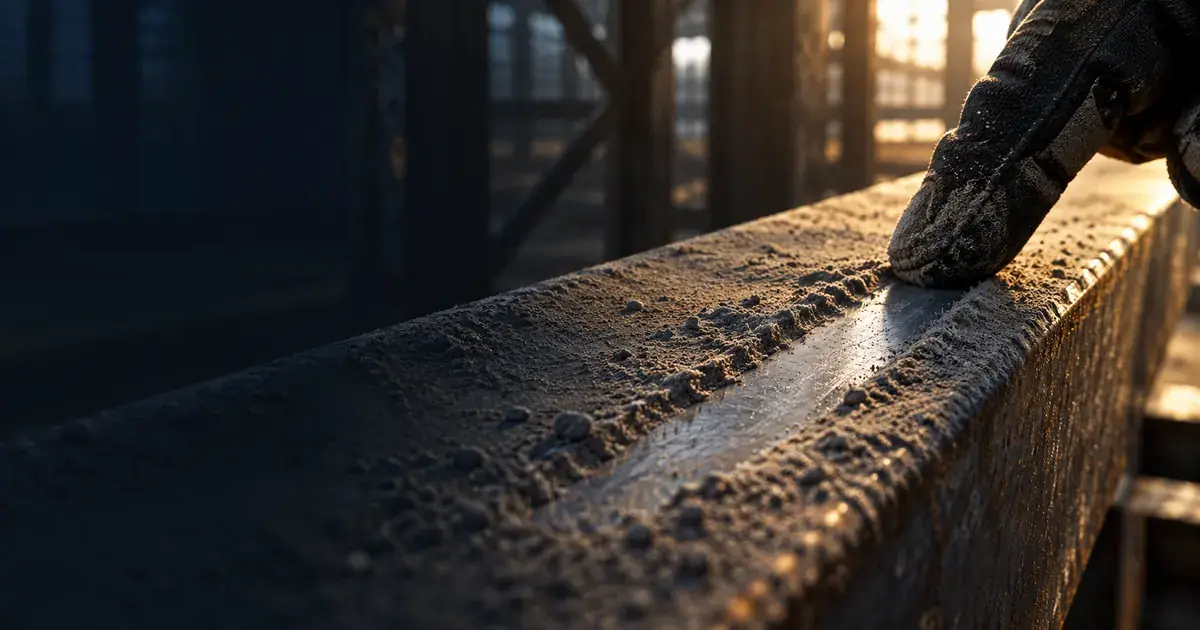
Because sooner or later it comes down. Settled dust falls onto stock and packing benches, dulls lighting, can interfere with smoke detection and, for some materials, adds fuel to a fire. None of this shows from the floor, which is why high areas are so often left for years.
Ordinary warehouse dust from cardboard and road grit is mainly a contamination and housekeeping issue. Dust from certain materials, such as wood, flour, sugar and some plastics and powders, can also burn, and WorkSafe's guidance on wood dust hazards and control warns about dust explosions and keeping ignition sources away.
Contamination
Dust on cartons and shrink wrap reaches customers. For food and pharmaceutical stock it can mean rejected goods.
Dimmer aisles
Dust on high-bay fittings and skylights cuts the light reaching the floor, where pickers read labels and drivers watch for people.
Fire systems
Heavy build-up around detectors and sprinkler heads is worth raising with your fire services contractor, who should inspect them.
Combustible dust
Where stored goods shed burnable dust, build-up on ledges is a fire risk in itself and should be kept to a minimum.
If your site handles materials that produce combustible dust, housekeeping is only one part of the control and you should get specialist advice. For ordinary warehouses, a high-level clean from a platform once or twice a year keeps the build-up down. Our high-level dust removal service uses vacuum methods up high rather than blowing dust around, so it does not simply move onto the stock below.
What do WorkSafe inspectors and customer auditors look at?
What they can see and what you can show. On the floor, that means exits, walkways, spills, lighting and amenities; on paper, it means a cleaning schedule, records that it is being followed, and SWMS for any higher-risk cleaning such as platform work.
An inspector who finds a blocked exit or an unmanaged hazard can issue a notice requiring it to be fixed. Customer and 3PL auditors will not issue notices, but their findings can cost contracts. Both are easier when the site is kept to a standard rather than cleaned up the day before.
| Area | What gets looked at | Common finding |
|---|---|---|
| Exits and walkways | Clear paths, readable marking, fire equipment accessible | Pallets or waste parked in a walkway |
| Floors | Spills, dust, damage, trip points | Oil or dust near docks and charging bays |
| Racking and high areas | Dust on stock and beams, light levels | Visible dust on top-level cartons |
| Amenities | Cleanliness, supplies, working facilities | Lunchroom and toilets below standard on late shifts |
| Cleaning work itself | SWMS, platform licences, traffic separation | No written method for high-level cleaning |
Cleaning work is on the list because it can create hazards of its own: a wet aisle during a shift, a scrubber working near a live forklift route, a platform raised over pickers. Auditors will ask how cleaning is separated from traffic and people, and a contractor should be able to show you the answer in writing before the first visit. If they cannot, that tells you something about how the rest of the work will be run.
What should go in a housekeeping evidence file?
Four things: the written schedule, records showing it was done, photos from periodic cleans, and the contractor's safety documents. Kept together and up to date, they let you answer most audit questions in minutes instead of days.
It does not need special software. A shared folder with a clear name and a monthly habit of adding to it is enough. The value is in being able to show a pattern over time, not a single good day. Name one person as the owner of the file, so it keeps going when staff change.
The schedule
The task list with frequencies, split between staff and contractor. Update it whenever the site changes.
Visit records
Signed or dated sheets, or app logs, for each clean and each daily housekeeping check. Keep at least the last year.
Photos
Before and after shots of high-level cleans, deep cleans and problem areas. Date every set.
Contractor papers
Insurance certificates, SWMS, inductions and platform licences. Check expiry dates each quarter.
A written program makes most of this automatic, because the schedule, visit records and monthly checks are built in. That is how our ongoing industrial cleaning programs run, and the daily and weekly lines can come straight from our printable warehouse cleaning checklist.
Where should a site start if housekeeping has slipped?
With a walk-around, a reset clean and a written schedule, in that order. Find the hazards, get the building back to a clean baseline once, then put a program in place so it stays there. Trying to fix everything with more frequent routine visits rarely works.
We can do the walk-around with you, price the reset clean and the program separately, and supply the SWMS and records your file needs. Book a site walk-through and bring your last audit report if you have one.
Book a walk-through- Walk-around to list the hazards
- One reset clean, high areas included
- Written schedule and records
- Monthly check against the standard
What else do managers ask about dust and safety?
Fire risk, records and liability come up most.
For anything legal, take advice specific to your site.