
Plants, processing sites, workshops, yards
Industrial Cleaning in Melbourne
Our industrial cleaning in Melbourne is for factories, processing sites, depots, workshops and yards, and it is planned around your production schedule rather than ours. Our crews clean floors, structures, high-level surfaces, the areas around plant, and the amenities your workers use every shift, and leave the inside of machinery to the people who maintain it. If you are still comparing options, all ten of our industrial and warehouse services are laid out side by side.
This page is for production, plant and facility managers who need a cleaning contractor that understands lockouts, shutdown windows and the difference between a dirty floor and a slip hazard.
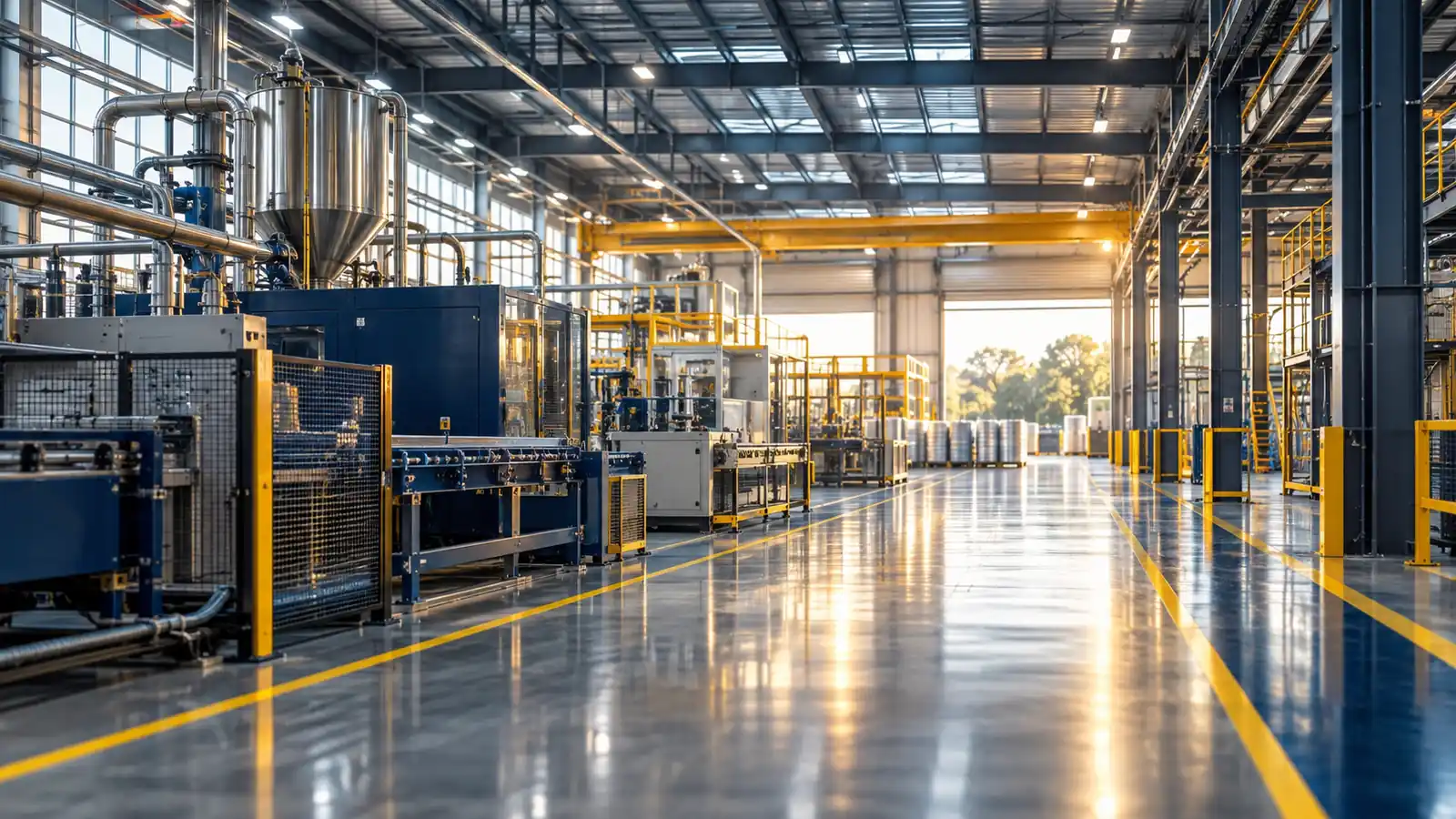
Facility types on our books
- F-AManufacturing
- F-BProcessing
- F-CWorkshops
- F-DYards
- Site-specific SWMS written before the first shift
- Inducted crews who stay on your site
- Certificate of currency sent with the quote
- Licensed operators for boom lift work
What does industrial cleaning in Melbourne actually cover?
Industrial cleaning in Melbourne covers everything in a production building except the process itself: floors and walkways, structures and high-level surfaces, the outside of plant and guarding, waste areas, and the offices, change rooms and canteens that go with them.
The table is the scope we walk through on a first visit. The right-hand column matters as much as the middle one. Knowing where our work stops is what lets your maintenance team, your hygiene contractor and us share a site without anything falling through the gap between contracts.
| Area | What we clean | Where we stop |
|---|---|---|
| Production floor | Degreasing, scrubbing and edge work around lines, pits covers and drains | Inside pits, sumps and trenches that count as confined spaces |
| Plant surrounds | Guarding exteriors, frames, control cabinet tops, cable trays near the line | Anything behind guarding or needing the machine opened |
| Structure and high level | Roof steel, ledges, ducting, lights, mezzanine undersides, crane rails | Roof exteriors and anything needing a roof access permit we do not hold |
| Waste and bin areas | Compactor surrounds, bin bays, dock aprons, spill kits restocked | Hazardous or regulated waste handling and transport |
| Amenities and offices | Change rooms, showers, toilets, canteens, first aid rooms, site offices | Clinical cleaning after a bodily fluid incident needing a specialist |
Most plants use us for three or four of these rows on a regular cycle, then call us back for the structure once or twice a year. The exact mix is set on the walk-through, when we can see the soil on the floor and the dust on the steel.
Which industrial facilities do we clean?
Four kinds, mainly: manufacturing plants, processing facilities, workshops and depots, and outdoor industrial yards. Each produces a different kind of dirt, so each gets a different method, chemical set and visit frequency.
A metal fabrication shop and a packaging plant can sit side by side in the same estate and need almost nothing in common from a cleaner. Matching the approach to the soil is the core of the job, and it is where a general commercial cleaner usually comes unstuck.
Manufacturing plants
Assembly, moulding, fabrication and packaging lines. The floor takes most of the punishment, from dropped product, lubricant and pallet traffic, and the roof steel collects fine dust that falls back onto finished goods.
Typical soil: oils, swarf, packaging dust, product residue
Processing facilities
Sites that mix, cut, blend or treat material, from timber and plastics to food ingredients. Dust control is the priority here, because airborne fines settle on every ledge and some are a housekeeping risk if they build up.
Typical soil: fine powders, fibres, sticky residues
Workshops and depots
Maintenance workshops, transport depots and service bays. Oil and tyre marks dominate, wash bays need their water captured, and the lunchroom is often the most used room in the building.
Typical soil: engine oil, brake dust, grease, road grit
Industrial yards
Hardstand, laydown areas, bin bays and loading aprons. Yards are cleaned for safety and appearance, and before audits or site visits, with sweeping first and washing only where the runoff can be controlled.
Typical soil: grit, spilt product, litter, oil stains
We work mostly in the south-east manufacturing belt around Dandenong South and its estates, and in the big western precincts, with regular sites through Laverton, Truganina and the Western Ring Road estates. Northern plants along the Hume corridor are covered as well.
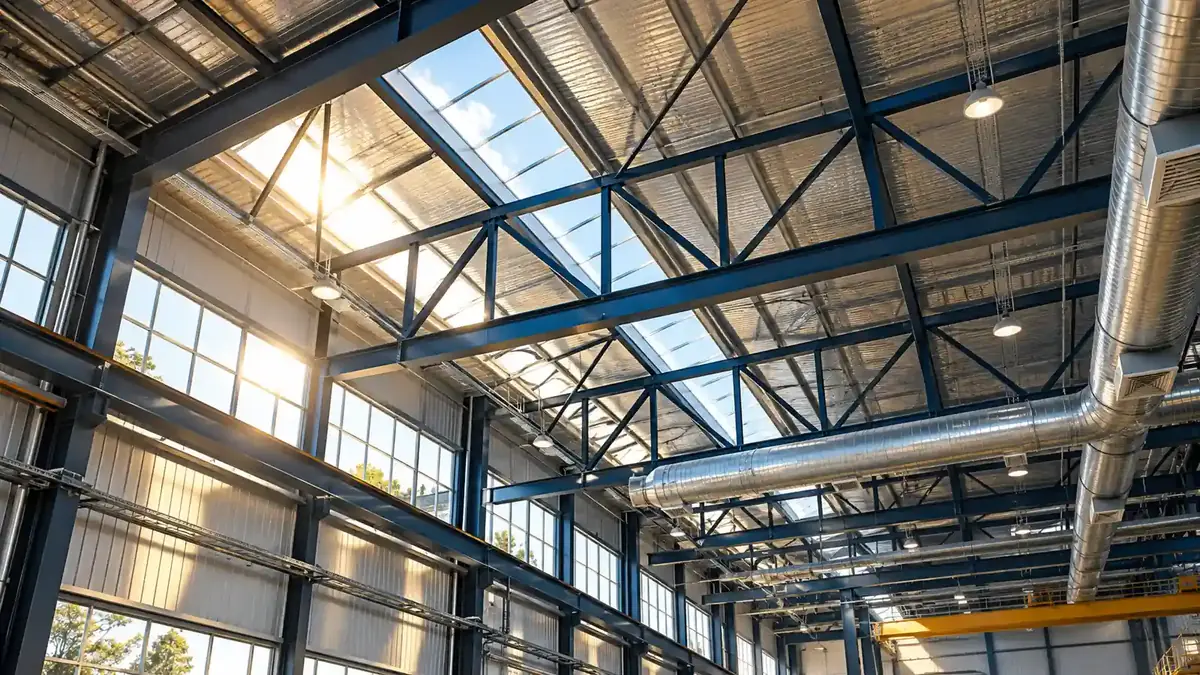
How is structural and high-level cleaning done in a working plant?
Top down, with vacuums rather than air lances, in sections that line up with your shutdown plan. Stock and machinery under each section are covered first, and the floor is cleaned last so nothing that drops is left behind.
In a plant, the dust on the steel is not just untidy. It drifts back into product, coats sensors and light fittings, and on some sites it is part of what the housekeeping plan is meant to control. Blowing it down with compressed air moves the problem rather than removing it, so we vacuum at height and only use air where a vacuum cannot reach, with the area below cleared.
Pole vacuums from the floor. Window sills, wall girts, tops of cabinets and guarding frames.
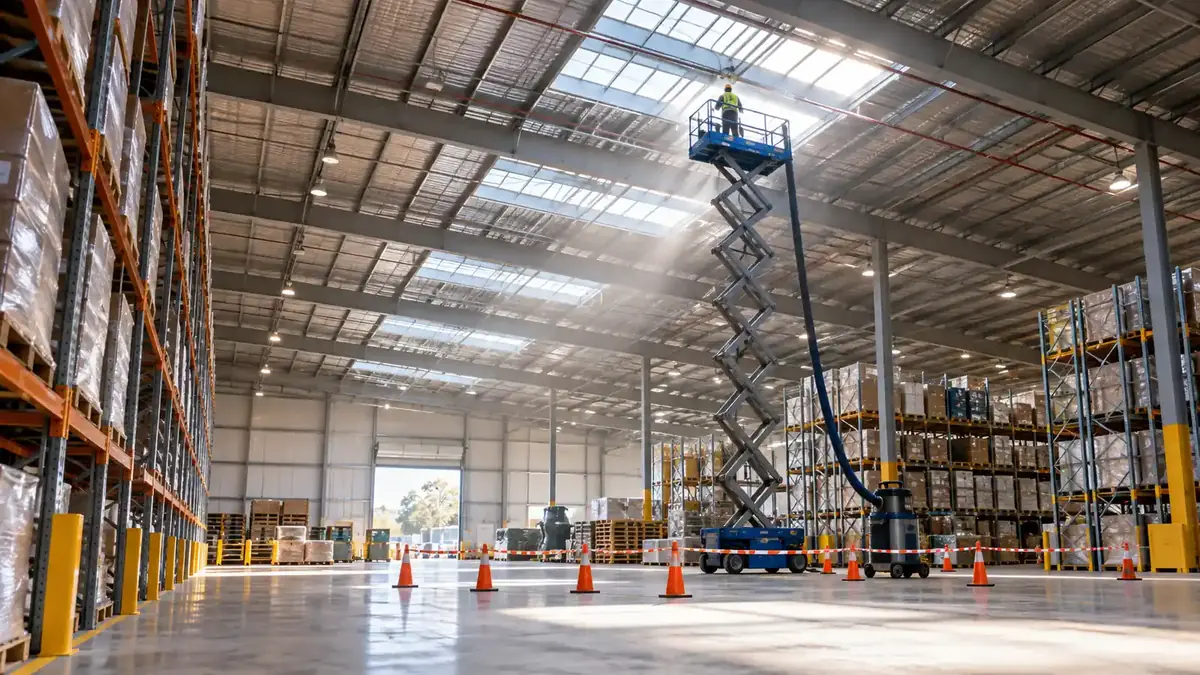
Scissor lift in a closed bay. Ducts, cable trays, compressed air lines and light fittings.
Scissor or boom lift, by bay. Rafters, purlins, crane rails and the underside of roof sheeting.
How often depends on what the plant makes. A dusty processing site may need the structure done every six months; a clean assembly hall might go two years. We look at the steel on the walk-through and give you an honest interval, not the most frequent one we can sell.
For the full method, frequencies and what a high-level clean costs to plan, see our page on high-level and deep cleaning.
How do we clean production floors, plant surrounds and amenities?
Floors are matched to the soil, plant surrounds are cleaned only while equipment is isolated, and amenities are cleaned every shift or every day, because they are the part of the plant your workers judge the cleaning on.
A production floor that looks clean can still be slippery. Oil films and fine powder both cut grip, so the test is not how it looks but whether the floor is dry and the film is gone. That is why we degrease before scrubbing and use recovery machines that take the dirty water away instead of spreading it thin.
| Soil | Where it shows up | How we remove it |
|---|---|---|
| Lubricants and cutting oils | Around presses, CNC machines and gearboxes | Degreaser dwell, agitation, recovery scrub, dry finish |
| Swarf and metal fines | Fabrication bays and under benches | Magnetic sweep and vacuum before any water goes down |
| Powders and fibres | Mixing, cutting and bagging areas | HEPA vacuum first, then a light scrub to lift the film |
| Sticky residue | Glue, resin and sugar lines | Targeted chemical, scraping, then machine scrub |
| Traffic grime | Forklift lanes, docks, entry points | Sweep, scrub and tyre-mark treatment on a cycle |
Change rooms, showers, canteens and toilets get their own crew member on larger sites, so they are never squeezed in at the end of a floor shift. Consumables are restocked, bins emptied and any damage reported the same night, rather than found by the morning shift.
What equipment and crew come to an industrial site?
A supervisor who stays with your site, a crew sized to the window, and machines chosen for your floor and soil: recovery scrubbers, sweepers, HEPA vacuums, degreasing kit and lifts for the structure.
We try hard to keep the same faces on each plant. Crews who know your lockout points, your forklift routes and which bay floods in heavy rain work faster and make fewer mistakes than a new team every week. When someone does change, they are inducted before their first shift, not during it.
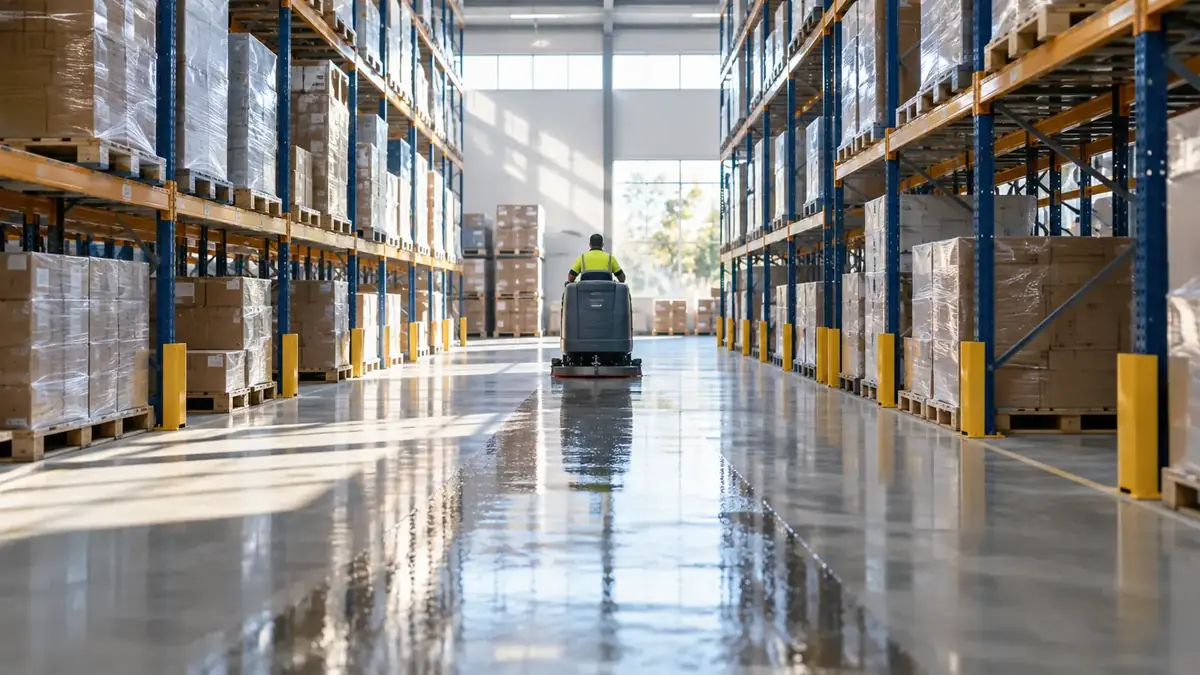
- Recovery scrubbers
- HEPA vacuums
- Scissor and boom lifts
- Degreasing kit
Chemicals are picked from your approved list where the plant has one, and every product we bring has a safety data sheet in the site file. Scrubber tanks are emptied to a sewer point you nominate, never to a yard drain, and our lifts arrive serviced with their inspection records on board.
How do you clean around production without stopping it?
By working in the gaps your schedule already has: between shifts, overnight, on weekends and during planned shutdowns. Routine work fits the nightly gap; heavy and high-level work is saved for shutdowns, when lines are locked out anyway.
The most common shutdown booking is a long weekend or the Christmas close. Below is how a typical two-day shutdown clean runs on a mid-sized plant. Times move to suit your lockout and restart plan, and the sequence is agreed in writing before the weekend.
Handover
Lines stop and are isolated by your team. We sign in, confirm the lockout points and set up barriers.
High level
Lifts go up first. Roof steel, ducts and fittings are vacuumed bay by bay while the floor is still dirty.
Plant surrounds
Guarding, frames and cable trays around each isolated machine, working in your line order.
Floors
Degrease, scrub and dry the production floor, then the lanes, docks and bin areas.
Detail
Amenities, offices, edges and anything the walk-round finds. Photos taken of each area.
Walk-through
Your supervisor walks the site with ours before lockouts are removed for the restart.
Plants that run around the clock have no quiet night, so we work the other way round. The floor is split into zones that line up with your maintenance calendar, and each zone is cleaned when its line is down for scheduled service. Over a month every zone gets its turn, and nothing has to stop just for cleaning.
Night work on a running site is simpler. We clean the zones that are idle, keep clear of anything still operating, and follow the site's traffic and isolation rules without exception. If a zone is not released by your shift lead, it is not cleaned that night and we note it on the visit report.
What industrial cleaning work do we not do?
We do not enter confined spaces, clean the inside of plant, remove asbestos, or remediate hazardous chemical spills. Each of these needs a licence, permit system or specialist crew, and we would rather refer you than pretend otherwise.
Victoria's health and safety law sets special requirements for work in confined spaces, and asbestos removal is licensed work, as WorkSafe Victoria's asbestos guidance explains. When one of these turns up on a walk-through, we write it into the quote as excluded and name the kind of contractor you need.
Confined spaces
Tanks, silos, pits, vessels and some ducts. Entry needs a permit system, atmospheric testing and rescue cover.
Refer to: a confined space entry contractor
Plant internals
Inside machines, conveyors, ovens, mixers or anything behind guarding. This is maintenance work tied to the equipment maker's procedures.
Refer to: your maintenance team or the OEM
Asbestos and suspect material
If we find damaged sheeting, lagging or debris that could contain asbestos, work stops in that area and it is reported to you.
Refer to: a licensed asbestos removalist
Hazardous spills
Chemical spills beyond what a site spill kit is designed for, and any regulated waste that needs licensed transport.
Refer to: a hazmat response and waste contractor
What compliance paperwork comes with an industrial site?
A site compliance file, set up before the first visit and kept current: SWMS, insurance certificate, induction records, the chemical register with safety data sheets, and licence checks for anyone who will operate a boom lift.
Plant safety managers tend to ask for the same things in a different order, so we keep one file per site and send it as a single pack. When a crew member changes, their induction goes into the file before they start. When the scope changes, the SWMS is reviewed and signed again.
- SWMS for your site, covering isolation, lifts, chemicals and wet floors
- Induction records for every crew member, updated when people change
- Chemical register with safety data sheets, matched to your approved list
- Insurance certificate and workers compensation evidence
Plants that face customer or certification audits often ask for visit records they can show an auditor. Each visit report lists the areas cleaned, the date, the supervisor's name and photos of anything unusual, and the reports are kept so you can pull a year of history when it is asked for.
Housekeeping, dust and the paperwork a facility should hold are explained in our guide to dust, housekeeping and safety on industrial sites.
What does industrial cleaning cost?
An industrial clean is priced from the soil type, floor area, height of the structure and the window you can give us. We quote a fixed figure after a walk-through; recurring work becomes a fixed monthly price.
Two plants of the same size can differ in price by a wide margin. A dusty packaging site with a clear weekend is quicker to clean than an oily machine shop with a four-hour window between shifts, even if the second one is smaller.
| Factor | Effect on price | How to keep it down |
|---|---|---|
| Type of soil | Oil and residue take more passes than dust | Regular cycles stop soil setting hard |
| Structure height | Lift hire, barriers and slower work | Group high-level work into one shutdown |
| Working window | Short windows add setup and pack-down time | Offer whole shifts or weekends |
| Weekend and holiday work | Penalty rates apply to crews | Use a weeknight where production allows |
| Waste volume | Skips and disposal are itemised | Clear scrap and pallets before we arrive |
How do you get your facility quoted?
Send the site address, rough floor area, what the plant makes and your production pattern. We book a walk-through, often during a shift so we can see the real conditions, and the fixed price follows within a day of that visit.
Tell us about any shutdown already on the calendar. Christmas and Easter closes fill early, and booking the date with the quote is the easiest way to get a crew and lifts locked in. Plants with a messy yard or an old storage shed sometimes start with a single yard and outbuilding clean-up before a routine program begins.
Request an industrial quoteWant the wider view first? Our warehouse and industrial cleaning homepage explains how we run live sites across the city.
- Site, floor area, what you make and your shift pattern
- Walk-through during a shift, with your safety lead
- Fixed price by area, plus the draft SWMS and exclusions
- Inductions done, first visit or shutdown date confirmed
What do plant managers ask before booking?
These four come up on nearly every industrial walk-through.
Anything more specific to your plant can go in the notes of the quote request, and the supervisor who visits will answer it on site.