
DC, 3PL and cross-dock sites
Logistics and Distribution Centre Cleaning
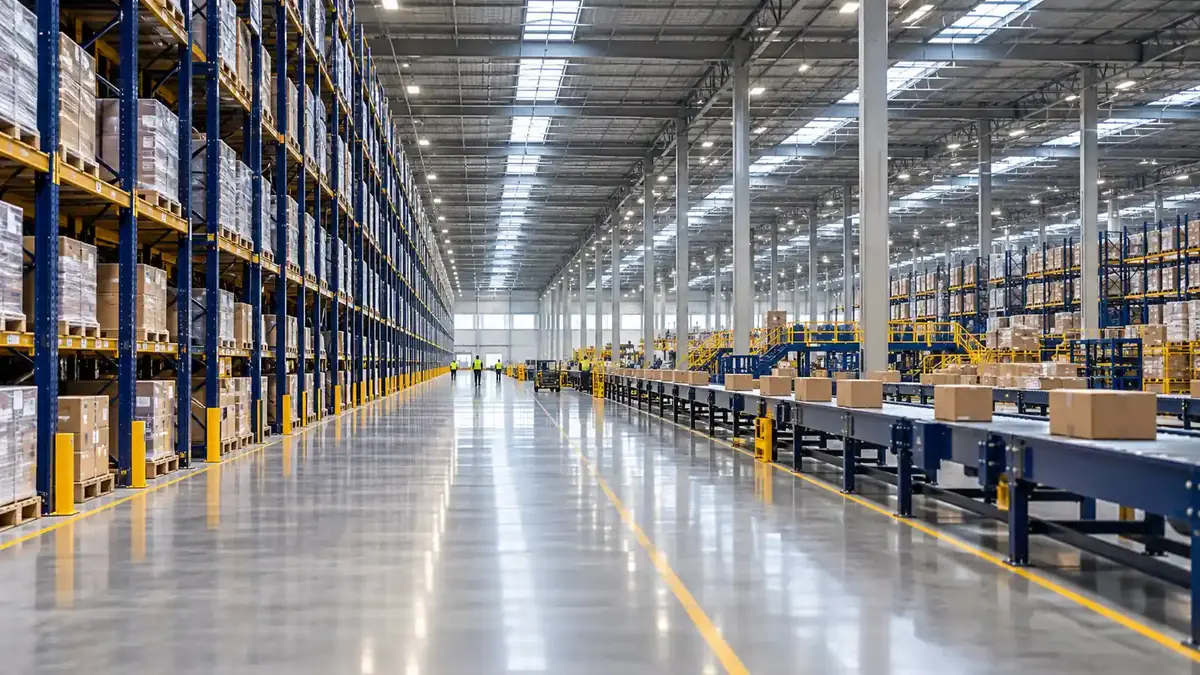
Our distribution centre cleaning covers the whole warehouse and logistics operation in Melbourne: docks and staging lanes, pick aisles at scale, amenities that take a beating at every shift change, and the aprons outside. It is built for DC managers and 3PL operators who run late or around the clock and expect contractors to arrive inducted, registered and reporting. DC work sits within our full range of industrial and warehouse services, and is almost always run as a program.
We fit around your pick waves and dock schedule, not the other way round.
Sites we run programs on
- DCRetail DCs
- 3PLContract logistics
- XDCross-docks
- FULE-commerce
- Portal-registered with documents lodged before day one
- Zone plan agreed with your shift leads
- Photo report after every visit
- Crew scales for peak season
How is cleaning planned at distribution-centre scale?
Distribution centre cleaning is planned by zone, not by building. A DC is split into docks, staging, pick aisles, amenities, offices and aprons, each with its own cycle and time window, so no single area closes for long.
The big DCs in Truganina, Derrimut and Dandenong South run to tens of thousands of square metres under one roof. Cleaning that much floor in one go is neither possible nor useful. The map below is how we break a typical site down on the first walk-through.
Dock doors and levellers
Swept every visit, scrubbed nightly, levellers cleared weekly
Staging lanes
Wrap, pallet debris, spills from damaged cartons
Pick aisles and racking
Ride-on scrubbing behind the pick waves
Amenities
Every shift change
Offices
Nightly or weekly
External aprons and bin bays
Swept weekly, washed where runoff can be captured
Each zone has a named contact on your side who can release it, and a window when it is quiet enough to clean. Once those two things are agreed, the plan largely runs itself. The supervisor keeps the zone list on site and updates it when the layout changes, for example when a new pick module goes in or a mezzanine is added. Light industrial units and small sheds use the same idea on a smaller scale, with three or four zones instead of six.
How are docks, staging lanes and aprons kept clean?
Docks are cleaned in the quiet gaps between truck waves, staging lanes when they are empty between pick and load, and aprons weekly. They are the dirtiest zones in any DC because everything that arrives from the road starts there.
A dock that looks tidy at 6 am can be covered in wrap, grit and broken pallet boards by 10. On wet Melbourne days the first few metres inside every open door also turn into a muddy strip from truck tyres and pallet jacks. The trick is frequency in short bursts rather than one long clean, and we agree those windows with your dock supervisor.
| Zone | What builds up | When we clean it | Method |
|---|---|---|---|
| Dock plates and levellers | Grit, wrap, pallet splinters in the pit | Between truck waves, pits weekly | Sweep, vacuum pits, scrub plates |
| Inside the dock doors | Tyre marks, rain and road dirt | Nightly | Ride-on scrub, mark treatment |
| Staging lanes | Wrap offcuts, strapping, carton spills | When lanes are empty | Litter pick, sweep, spot clean |
| External aprons | Road grit, oil, litter blown in | Weekly | Sweeper, oil treatment, drain check |
| Bin and recycling bays | Cardboard, wrap, spills, odour | Weekly | Pick up, wash down with runoff captured |
How do amenities cope with shift-change load?
By cleaning them just before each shift change and checking them just after. A DC with a few hundred people across three shifts puts more load on its toilets and break rooms than most office towers, all in short peaks.
Amenity complaints in DCs are rarely about the overall standard. They are about the 20 minutes after a shift change, when the break room bins overflow and the toilets run out of paper. Timing the clean to those peaks fixes most of it.
Amenity use over a 24-hour, three-shift day
On large sites, one crew member stays on amenities for the whole visit. Break rooms get fridges, microwaves and tables done on a set cycle, and consumables are restocked from a store we manage on site so nobody runs out mid-shift.
Break rooms also carry the most food waste in the building, so bins there are emptied every visit and the fridge is cleared on a day agreed with your team, with notice posted first so nobody loses their lunch.
Staff notice amenities first, and on some sites they are what decides whether a contractor keeps the work. On sites with a separate drivers' amenity near the gatehouse, that block is added to the cycle too, because it is used by visitors who form a view of the whole site from it.

How are floors cleaned at DC scale?
With ride-on sweepers and scrubber-driers working behind the pick waves, one block of aisles at a time. On a 24-hour site, every aisle gets its turn over the week without any area being closed for more than an hour or two.
Floor condition in a DC matters for more than looks. Dust on pick faces ends up on outbound cartons, grit wears forklift tyres and wheels, and a film on the slab affects stopping distances. Keeping the floor clean is part of running the site well.
We plan the scrub route with your shift lead so our machines never share an aisle with a working reach truck, and our crews follow your forklift traffic management plan the way WorkSafe Victoria expects every contractor on site to. Where aisles are very narrow, compact machines are used and the strip beneath the lowest beam gets a hand vacuum.
The full floor method, including tyre marks and finish types, is on our warehouse floor scrubbing page.
Can a cleaning contractor work inside our compliance portal?
Yes. Most large DCs and 3PLs manage contractors through an online portal, and we register, lodge documents and complete site inductions through it before the first shift. Your team should not have to chase us for paperwork.
Portals differ, but they ask for much the same pack. We keep it current and update the portal ourselves when an insurance certificate renews or a new cleaner joins the crew, so your compliance status stays green.
- Public liability certificate of currency, uploaded and renewed before expiry
- Workers compensation evidence for the crew
- SWMS and risk assessments for the site's scope, signed
- Worker inductions completed per person, online and on site
- Safety data sheets and a chemical list covering each product we bring
- Plant records for lifts and scrubbers where the site asks for them
Wider housekeeping duties for DCs, including dust, forklift areas and walkways, are covered in our warehouse safety and housekeeping compliance guide.
What reporting do you get after each visit?
A short visit report with photos: which zones were cleaned, anything skipped and why, and any issues found, such as leaks, damaged racking or repeated spills. It is laid out in a form your facility manager can pass straight on.
Many DCs report cleaning performance upwards to a head office or a 3PL client. The report is built for that: dated, zone by zone, with photos attached rather than buried in an email thread.
If a zone could not be cleaned because it was not released, the report says so. That protects both of us, and it usually starts a quick conversation about moving that zone to a better window.
- Z1 Docks 1 to 12 scrubbedDONE
- Z3 Aisles 20 to 34 scrubbedDONE
- Z3 Aisle 35 not releasedSKIPPED
- Z4 Amenities, three checksDONE
- Roof leak over dock 7ISSUE
- Bent upright, aisle 22ISSUE
Each month the visit reports are summarised on a single page: tasks completed against the program, issues raised and closed, and anything we suggest changing. If a trend shows up, such as the same dock flooding every heavy rain or one aisle always blocked when we arrive, the summary flags it so it can be fixed at the source rather than cleaned around month after month.
Why do DCs run cleaning programs, and how do they handle peak season?
A program fixes the zone cycles, the crew and the monthly price, and it flexes for peak. When volumes jump before Christmas or at the end of the financial year, the crew grows and the dock and amenity cycles tighten, then return to normal.
The chart shows a typical retail DC year. Your own peaks may differ, and we set the extra crew and cycles in the program so peak weeks are priced in advance rather than argued about in November.
Programs are also where high-level work gets scheduled. A DC deep clean once a year, timed for a quieter month, keeps dust off outbound stock. Read how our scheduled cleaning programs are set up, reported and reviewed.
What happens when you take over from another cleaning contractor?
A planned handover over two to four weeks: portal registration and inductions first, a zone plan agreed with your leads, a first month with the supervisor on the floor every visit, and a review at the end of it.
Most DCs already have a cleaner when they call us, usually one that has drifted. Changing contractor should not create a gap in service, so our first shift is booked for the morning after the outgoing contract finishes, with the crew already inducted and the portal showing green.
Register
Portal set up, insurances and SWMS lodged, inductions booked.
Walk
Zone walk with your leads, windows and release contacts agreed.
Start
First shift runs with the supervisor on the floor throughout.
Reset
Problem zones left by the last contractor get a one-off catch-up clean.
Settle
Cycles adjusted to what the reports show, not what we guessed.
Review
First monthly summary and a sit-down with your facility manager.
How do you get your DC or 3PL site quoted?
Send the floor area, shift pattern, headcount per shift, number of docks and your portal details. A walk-through with your operations lead follows, then a fixed monthly figure for the whole program, with peak-season cover shown separately.
Headcount and dock count move the price as much as floor area, because they drive amenity and dock frequency. The rest of the factors are explained on our page about warehouse cleaning prices.
Quote my DCSmaller warehouses and single-shift sites are covered on our main Melbourne warehouse cleaning page.
- Floor area, shifts, headcount, docks and portal details
- Walk-through with your operations or site lead
- Fixed monthly program price, peak cover itemised
- Portal registration, inductions and first week planned
What do DC and 3PL managers ask about distribution centre cleaning?
Portals, round-the-clock sites and peak season: the questions that come up on nearly every DC walk-through.
Your site's own rules, such as PPE or vehicle standards, can be added to the request.