
Yards, sheds and whole sites
Industrial Site Clean-Ups
An industrial site clean-up in Melbourne gets a yard, shed or whole facility back from mess to usable in one planned job: rubbish out, floors swept and washed, walls and offices cleaned, and the site left ready for the next tenant, the builder's handover or the auditor. We do these for owners, builders, property managers and operators across Melbourne and parts of regional Victoria. Clean-ups sit alongside our other warehouse and industrial cleaning services, and often lead into one.
Send photos with the request and we can usually give you a price range before the site visit.
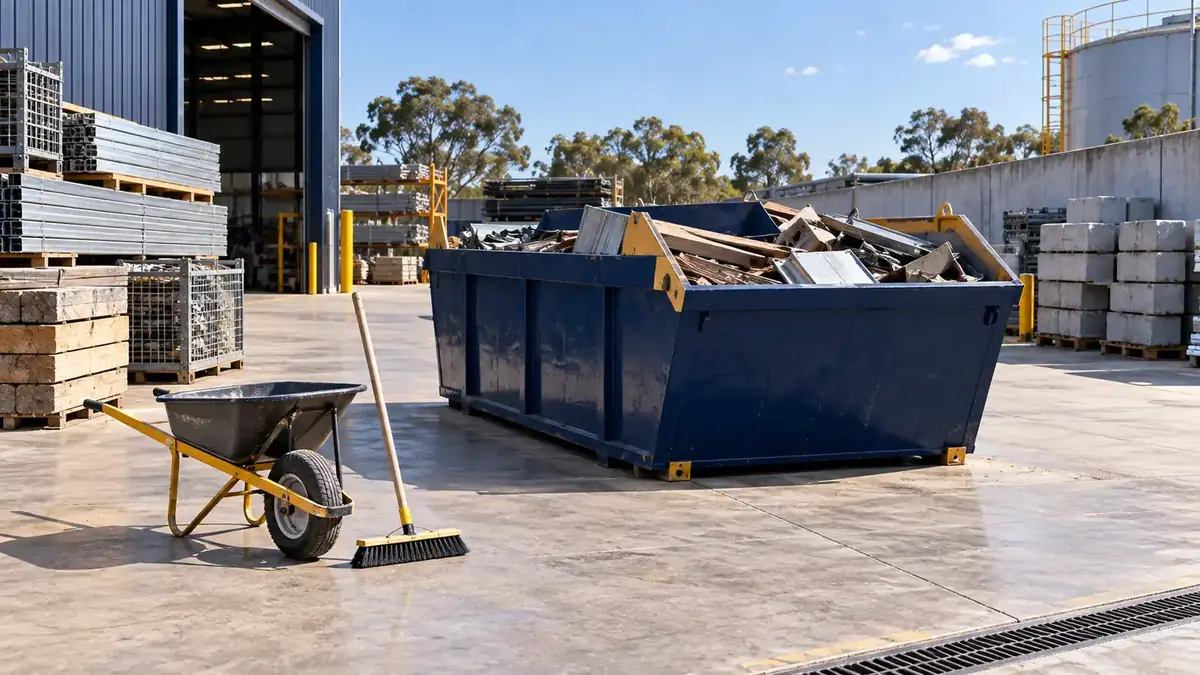
Clean-ups we are called for
- BUILDPost-build
- EXITVacated
- EVENTAfter a storm
- AUDITPre-audit
- Priced as one job with waste listed separately
- Skips coordinated through licensed waste contractors
- SWMS and induction on building and live sites
- Hazardous finds stopped and referred, never touched
Which situations call for an industrial site clean-up?
When the mess is past what a routine cleaner handles: after construction or a fit-out, when a tenant leaves in a hurry, after a storm or minor incident, or before an audit, inspection or sale. Industrial site clean-up in Melbourne is usually one planned job over one to five days.
These four situations cover almost every call we get. The numbers under each are typical rather than fixed, and the walk-through, or the photos you send, pins them down for your site.
New build, extension or fit-out finished, and the builder's dust, offcuts and packaging are everywhere.
- Typical time
- 1 to 3 days
- Waste
- Light to medium
A tenant has gone and left pallets, broken racking, rubbish and years of dirt behind.
- Typical time
- 2 to 5 days
- Waste
- Medium to heavy
Storm water through a roller door, a roof leak or a non-hazardous product spill that has spread.
- Typical time
- 1 to 2 days
- Waste
- Varies
An audit, inspection, buyer walk-through or new customer visit is booked and the site is not ready.
- Typical time
- 1 to 3 days
- Waste
- Light
What does a post-construction or fit-out clean include?
Everything the builder leaves behind: dust on every surface, offcuts and packaging, paint and silicone marks, and grit ground into new floors. It runs in stages so the site can move from building to handover to operation.
New warehouses and fit-outs in the big estates around Truganina, Dandenong South and Epping are often handed over in stages, one bay or office level at a time. We follow the builder's program and clean each area as it is released, so the whole site does not wait for the last trade to finish.
Rough clean
Once the main trades are out: offcuts, packaging and loose debris removed, floors swept, the worst of the dust vacuumed from ledges and frames.
Final clean
Before handover: floors scrubbed, glazing and frames cleaned, paint and label residue removed, offices and amenities cleaned to move-in standard.
Touch-up
After defects and last trades: a quick pass over whatever they disturbed, so the building is clean on the day the operator moves in.
On a building site we work under the principal contractor's induction and site rules, sign in and out through their system, and provide our own SWMS for the cleaning work. New floors get neutral cleaners only, because some sealers and coatings are not fully cured at handover.
How is a vacated site cleared down?
In two parts: clear first, clean second. Leftover pallets, rubbish, broken racking and furniture are removed and disposed of, then the empty building is swept, washed and cleaned so it can be inspected, sold or relet.
Owners and agents call us when a tenant has left a site in worse shape than the lease allows, or has disappeared altogether. The first job is usually a count: what is waste, what is salvageable, and what needs a specialist. We photograph the site before we start, so there is a record of what was left.
Once it is clear, the clean itself is close to a make-good: floors, walls to reach, offices, amenities, docks and the yard. If there is a lease clause to meet, see how a make-good clean to the lease is run, because the standard is set by the lease rather than by us.
Keys, access codes and alarm details are handled through one person on your side, and the site is locked and alarmed each evening. Where the building has been empty for a while, we check that power, water and lighting work before the crew arrives, so the first day is not lost.
Salvageable items such as sound racking or pallets can be set aside for you to sell or reuse. Anything we remove goes to a licensed facility.
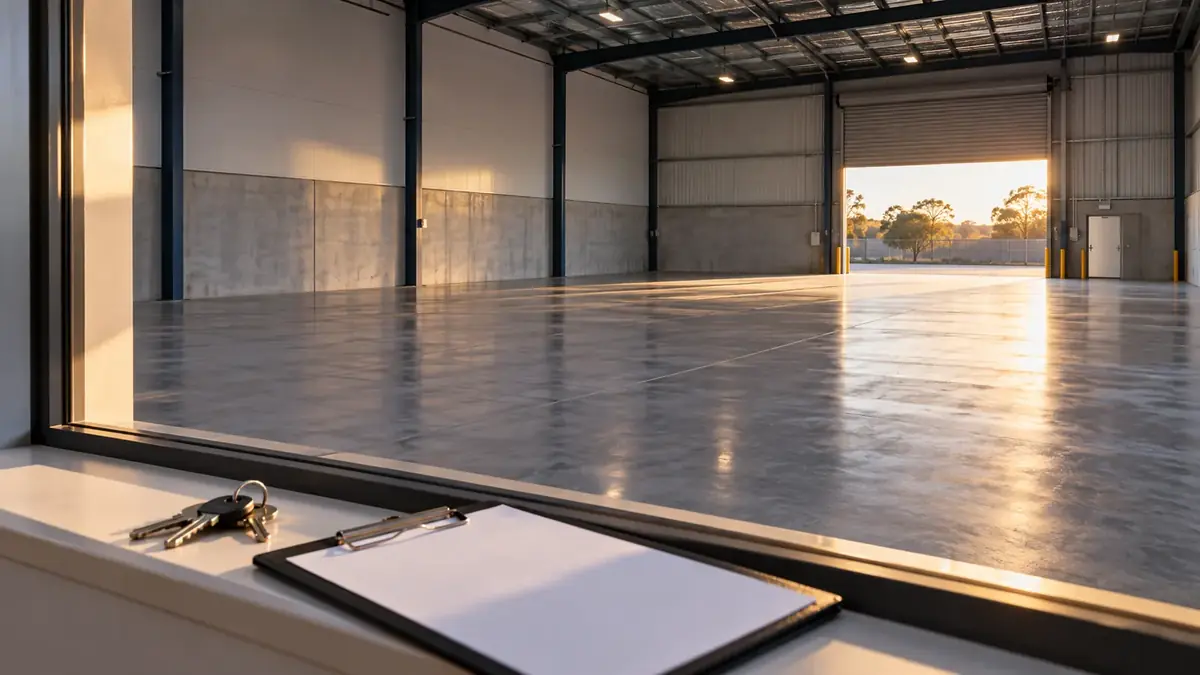
What happens in a pre-audit or pre-sale blitz?
A short, heavy clean over one to three days that deals with what an auditor or buyer sees first: floors, walkways, amenities, offices, the yard and the entry. It is planned backwards from the date of the visit.
Blitzes are usually booked with little notice, so we work to a fixed plan rather than reinventing it each time. A typical three-day version on a mid-sized warehouse runs like this, with the most visible areas done last so they are fresh on the day.
Day 1 CLEAR
- Rubbish, old pallets and wrap removed
- Yard and hardstand swept
- High dust within reach vacuumed
- Bin bays and waste areas washed
Day 2 CLEAN
- Warehouse floor swept and scrubbed
- Tyre marks and oil spots treated
- Racking bases and edges detailed
- Dock plates and door tracks cleared
Day 3 PRESENT
- Amenities and lunchroom cleaned
- Offices and reception detailed
- Entry glass and signage wiped
- Walk-round with you before the visit
If your audit is part of a regular cycle, it is worth asking whether a routine program would be cheaper than a blitz every year. Often it is, and the site stays audit-ready without the scramble.
How are storm and incident clean-ups handled?
Fast and in order: make the area safe, remove water and debris, clean and dry the floor, then clean stock-free surfaces and amenities. We handle non-hazardous incidents only, and anything insurable is photographed before we touch it.
Melbourne storms regularly push water and leaves under roller doors and through tired roof sheets, especially in older sheds in the western and northern suburbs. A few centimetres of dirty water across a warehouse floor can stop operations for days if it is left to dry on its own.
We bring wet vacuums and scrubber-driers to lift the water, clear silt and debris from the floor and drains, and clean the base of racking so stock can go back. Your insurer may want photos of the damage first, so we take a set before any clean-up starts and send them with the invoice.
Product spills of ordinary goods, such as food, drink or packaging materials, are handled the same way. Anything unknown, chemical or leaking from a drum waits for the right contractor.
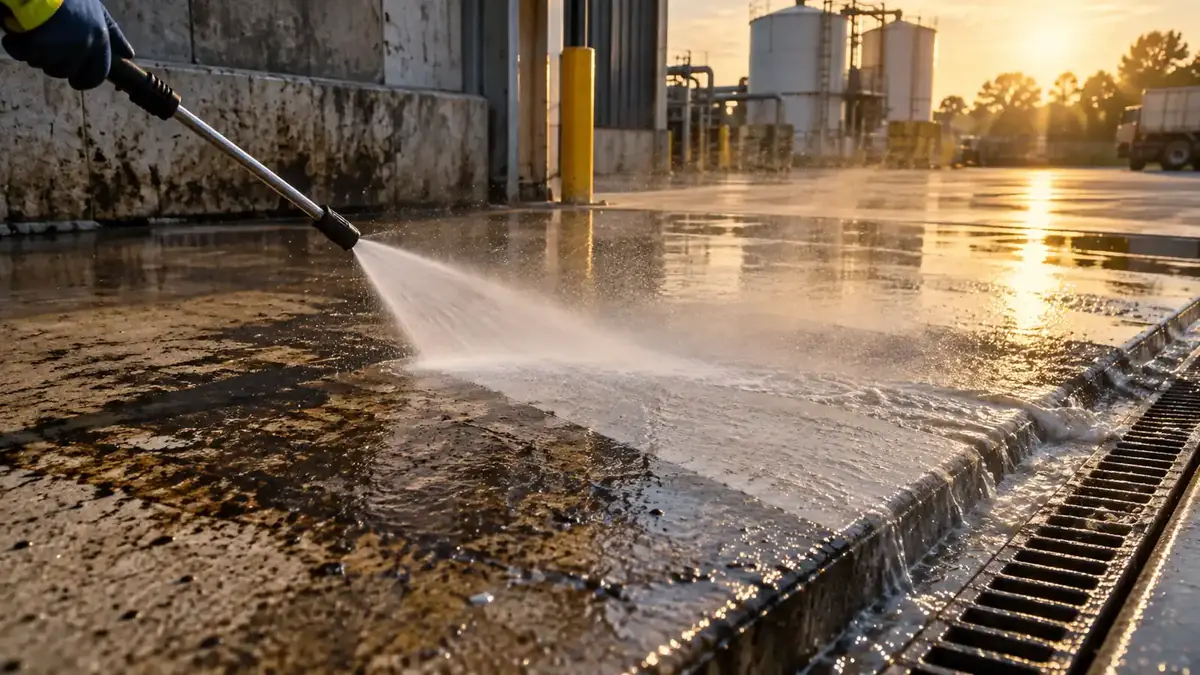
What will a site clean-up crew not touch?
Asbestos, hazardous chemicals, biological hazards, contaminated soil and anything in a confined space. If we find any of these during a clean-up, we stop work in that area, tell you straight away and name the kind of licensed contractor you need.
Clean-ups turn up surprises, especially on older sites. Honest limits protect you as much as us. Waste has rules too: under Victoria's environment protection law, businesses producing industrial waste have duties covering how it is transported and where it goes, so we only use licensed disposal.
Asbestos
Broken fibre-cement sheets, old pipe lagging or dusty debris that might contain it. Licensed removalist only.
Chemicals
Drums, containers or spills of unknown or hazardous product. Hazmat contractor.
Biohazards
Sharps, bodily fluids, dead animals in quantity. Specialist trauma or biohazard cleaner.
Contaminated soil
Oil-soaked ground, fill or stockpiles. Environmental consultant first.
Confined spaces
Tanks, pits and sumps. Entry needs a permit system and trained crew.
Do you do industrial site clean-up work across Victoria?
Metropolitan Melbourne is our home ground and where most clean-ups happen. Regional sites are quoted case by case, usually for bigger clean-ups where a crew can stay for the job, with travel and accommodation shown on a separate line.
Clean-ups suit regional work better than routine cleaning, because they are one-off jobs with a clear finish. If your site is outside Melbourne, send photos and the address, and we will tell you plainly whether it makes sense for us to take it on.
Melbourne
All industrial belts, from the western estates to the south-east corridor.
Geelong
Port-side and northern Geelong industrial areas, by arrangement.
Ballarat and Bendigo
Larger clean-ups and post-construction work, by arrangement.
Latrobe Valley
Plant and yard clean-ups, planned around a crew stay.
For routine cleaning on a Melbourne plant after the clean-up is done, see our industrial cleaning for operating plants.
What does an industrial site clean-up cost?
It depends on three things: how much waste has to go, how many crew-days the clean takes, and how far the site is from us. Waste is often the biggest single cost, which is why it is always itemised.
A post-construction clean of a new shed is mostly labour, with a small skip. A vacated site full of broken racking and pallets can be the opposite, with disposal costing more than the cleaning. Setting the two apart in the quote lets you see where the money goes, and gives you the option of clearing some of it yourself.
| Line in the quote | What it covers | How to reduce it |
|---|---|---|
| Labour | Crew-days for clearing and cleaning | Clear access, power and water on arrival |
| Waste | Skips, tipper runs, tip fees | Sell or remove salvage before we start |
| Equipment | Scrubbers, lifts, wet vacuums | Group high work into the same visit |
| Travel | Regional travel and accommodation | Book one longer visit, not several short ones |
How do you get a site clean-up quoted quickly?
Send photos. Six or so clear shots, with the address and floor area, are usually enough for a price range straight away. A short site visit then fixes the price and confirms what waste is involved.
Waste is the part that varies most, so it is priced as its own line: skip sizes, number of lifts and any items needing special disposal. Labour is fixed once the scope is agreed. Crews can usually start within a few working days of acceptance, sooner if the job is urgent and we have people free. The factors behind the numbers are on our page explaining how cleaning prices are worked out.
Send photos for a quoteLooking for ongoing cleaning rather than a one-off? Our Melbourne warehouse cleaning service covers regular programs.
The photos that help most:
- The whole floor from each end
- The yard and any rubbish piles
- Offices and amenities
- Anything that worries you
- Access: gates, docks and doors
- Close-ups of stains or damage
What do owners and builders ask about site clean-ups?
Speed, rubbish and hazards: these three questions come first on most clean-up calls.
If your situation is unusual, say so in the request. A clean-up that looks odd on paper is often straightforward once we see it.