
Tenants, agents and landlords
End-of-Lease Warehouse Cleaning and Make-Goods
Our end-of-lease warehouse cleaning in Melbourne gets a vacated shed back to the standard your lease asks for, and proves it with dated photos, so the handover inspection passes the first time. We work for outgoing tenants protecting their bond, agents managing several handbacks, and landlords getting a building ready for the next tenant. Make-goods are one of our warehouse and industrial cleaning services, and often the most time-critical.
Bring us the clause and whatever report was done when the lease started, if you have them. They decide the scope more than anything we see on the day.
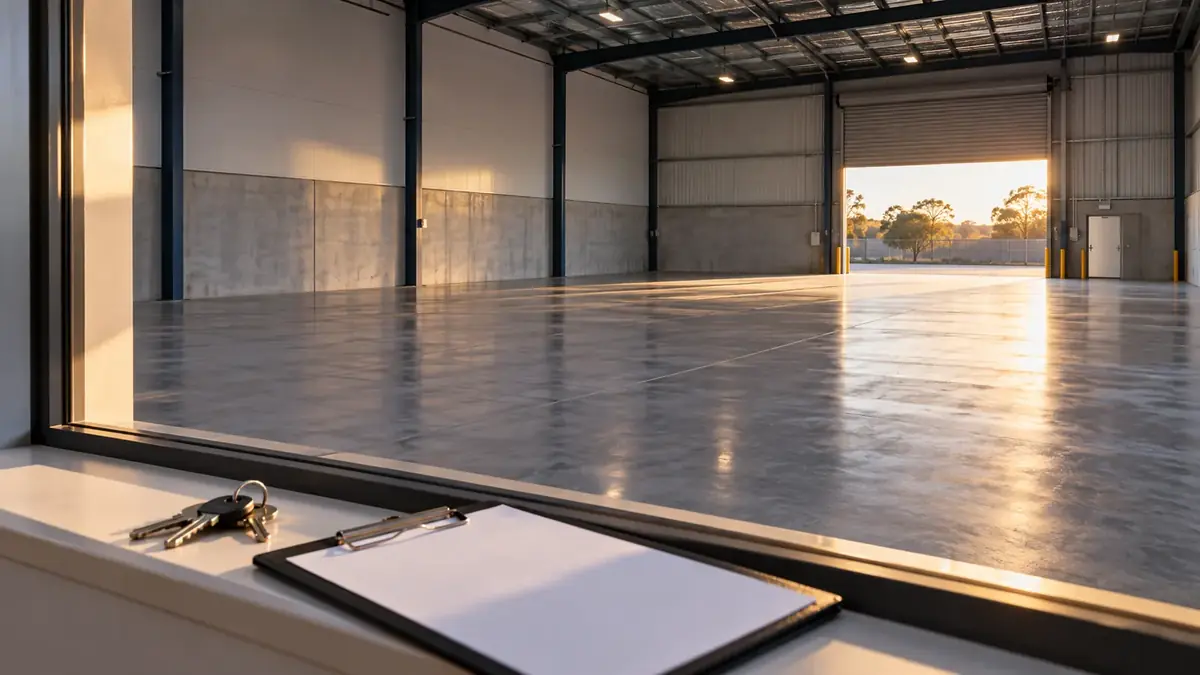
Who books a make-good
- OUTTenants
- AGTAgents
- OWNLandlords
- NEWIncoming
- Quoted against the clause, not a generic list
- Dated photo log for every area
- Timed to your handover, after racking comes out
- Agents welcome at the final walk-through
What is a warehouse make-good clean?
It is the end-of-lease warehouse cleaning your lease requires before you hand the keys back. The make-good clause sets the standard, usually by reference to the condition at the start of the lease, less fair wear and tear.
Clause wording varies a lot between industrial leases in Melbourne, and the difference matters. The table translates the phrases we see most often into what they usually mean for cleaning. It is plain-English guidance, not legal advice. If a clause is unclear, check it with your lawyer or the agent before we quote.
| Clause wording | What it usually means for cleaning | Typical extra work |
|---|---|---|
| Broom clean | Rubbish out and the floor swept. The lightest standard. | Yard sweep, bins emptied |
| Clean and tidy condition | Floors cleaned, offices and amenities cleaned, no marks left by the tenant | Machine scrub, amenities descaled |
| Condition at commencement, fair wear and tear excepted | Back to how it looked on the entry condition report | Stain treatment, walls washed, high-level dust |
| Professionally cleaned | A commercial cleaner's invoice may be asked for as proof | Invoice and photo log |
| Remove tenant's fixtures and make good damage | Fit-out out first, then repairs, then the clean | Anchor holes, line marking removal by others |
The Victorian Small Business Commission's end-of-lease guidance is written for retail tenants, but its advice carries over: check the make-good clause, compare against the start-of-lease report, and walk the premises with the landlord or agent before the lease ends.
What do agents actually inspect at handback?
Floors first, then amenities, walls and high-level surfaces, docks and doors, and finally the yard. Stains on the slab and dirty toilets are the two findings that most often lead to a deduction or a second clean.
Most agents walk a warehouse in the same order, starting where the visitor starts. We clean in the reverse order, finishing with the entry and office, so the first thing the inspector sees on the day is also the freshest.
Entry and office
Carpet, glass, kitchen and the reception floor. First impressions set the tone.
Amenities
Toilets, showers and the lunchroom. Scale and grime are easy to spot.
Warehouse floor
Oil stains, tyre marks, racking footprints and anchor holes.
Walls and high level
Dust on girts, ledges and lights, marks on walls and columns.
Docks and doors
Dock levellers, roller door tracks and the strip under each door.
Yard
Rubbish, weeds in joints, oil on the hardstand and blocked pits.
What is included in our make-good scope?
Four areas: the warehouse floor, walls and high-level surfaces, offices and amenities, and docks and yard. Each is scaled up or down to match your clause, so you pay for what the lease asks for and nothing more.
A "broom clean" lease might only need the first card. A "condition at commencement" lease on a site that held oily plant for ten years will need all four, and sometimes a second pass on the floor.
Floor
- Sweep and machine scrub
- Oil and tyre-mark treatment
- Racking footprints cleaned
- Anchor holes vacuumed
Walls and high level
- Walls and columns to reach
- Girts, ledges and sills
- Lights and roof steel if required
- Doors and frames
Offices and amenities
- Carpets vacuumed or steamed
- Kitchen cupboards and fridge emptied
- Showers and toilets descaled and rinsed
- Windows inside and out
Docks and yard
- Dock levellers cleared
- Roller door tracks
- Hardstand swept, stains treated
- Pits and grates cleared
The floor work uses the same machines and method as our warehouse floor scrubbing service. Where the lease calls for high-level dust to be removed, we bring lifts and follow our method for rafters, lights and roof steel.
How are photos and sign-off handled?
Every area is photographed before and after, with the date, and the set is sent to you as a single log. If the agent or landlord walks the site with us at the end, we note anything they raise and fix it before we leave.
Disputes at handback usually come down to one side's memory against the other's. A dated photo log, laid out against the areas in the entry condition report, removes most of that argument. Tenants use it to close out the lease; landlords use it to accept the building without a second inspection.
If something cannot be fixed by cleaning, such as a cracked slab or a stain that has soaked through old concrete, it goes in the log with a note. You know about it before the inspection rather than during it.
The log is yours to keep. Several agents we work with file it against the property, so the next tenant's entry report can start from the same photos.
Why do make-goods fail inspection?
Usually because the clean was done too early, the floor was only swept, or the high-level dust in the lease was ignored. Nearly every failed handback we are called to fix comes down to one of the five reasons below.
A second clean after a failed inspection costs more than doing it properly the first time, and it often lands on top of rent for extra days. Knowing where others slipped helps you brief the job.
- Cleaned before the racking came out. The footprints and anchor holes under the racks were never touched.
- Swept, not scrubbed. A grey film and old oil marks stay on the slab and show up in daylight.
- High level skipped. The lease mentioned dust on structure, and nobody went up.
- Amenities rushed. Scale in showers and stained toilet pans are quick to spot and hard to argue about.
- No evidence. Without dated photos, the tenant cannot show what was done, and the landlord's memory wins.
When should a make-good clean be booked?
Book it as soon as you know the handover date, and schedule the clean for the days after the racking and fit-out come out. The clean is the last trade in, and the photos are taken just before the keys go back.
The usual problem is not time for the clean itself, which is often two to four days. It is the racking removal, forklift pick-ups and repairs running late and squeezing the clean into the final night. Planning backwards from the handover date avoids that.
Walk-through, clause and condition report reviewed, fixed quote sent.
Racking and fit-out removal dates locked in with your contractors.
Site empty. Our crew starts on high level and walls, then floors.
Offices, amenities, docks and yard. Photo log compiled.
Final walk with the agent. Anything raised is fixed on the spot.
Short notice happens. If the handover is next week, say so in your request and you will get a straight answer on whether the scope fits. Tenants in the Moorabbin and south-east estates often face tight turnarounds because units there relet quickly; our Moorabbin warehouse cleaning page covers how we handle those smaller units.
What about landlords cleaning between tenancies?
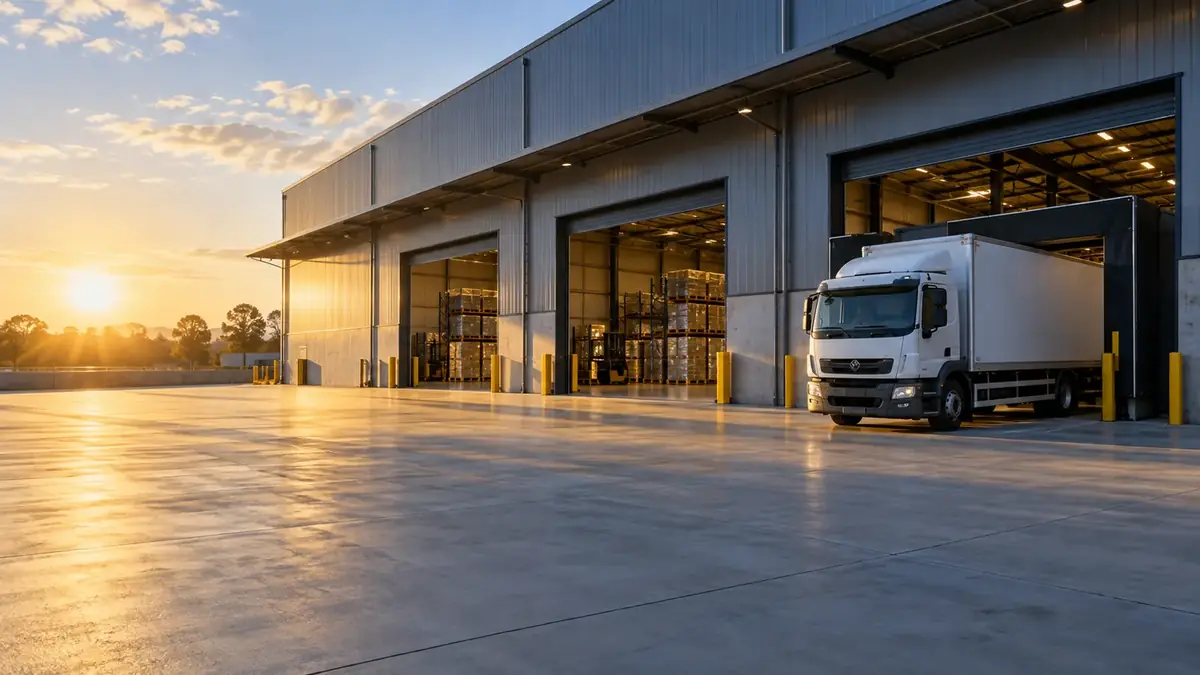
Landlords book us after the outgoing tenant leaves and before the next one inspects. The aim is different: not to satisfy a clause, but to present the building well and give the new tenant a clean start that matches their entry report.
A shed that shows well rents faster. Between-tenancy cleans focus on what a prospective tenant notices: the floor, the office, the amenities and the view from the street. We also note repairs a tenant is likely to raise, so they can be fixed before the inspection.
If the outgoing tenant's make-good fell short, and the building was left with rubbish, stock or broken racking, it may need a clear-down and site clean-up first. We can quote both together.
Agents managing several properties can set up a standing arrangement, with one contact on our side and the same photo log format for every building.
What does a warehouse make-good cost?
The clause sets most of it. A broom clean of a clean shed is a small job; a return to commencement condition on a site that held oily plant for a decade is several days of work, often with lifts. Floor area and site condition do the rest.
We price make-goods as one fixed figure with the floor, high-level work, amenities and yard shown as separate lines. If money is tight, that breakdown also shows where you have choices, for example leaving work to the landlord that the clause does not require.
In our experience, two things push a make-good price up more than people expect. The first is oil in bare concrete under old plant or forklift parking, which can need two or three treatments. The second is high-level dust on a lease that mentions structure, because that brings in lifts. Everything else, such as offices, amenities, docks and the yard, is fairly predictable once we have walked through the site with you. See how high-level work is planned if your clause includes it.
How do you get a make-good quoted?
Send the make-good clause, the entry condition report if you have it, the floor area and the handover date. We walk the empty site, or the site as it is, and send a fixed price that follows the clause line by line.
Quoting against the clause is what keeps the price fair. It stops you paying for work the lease does not ask for, and it stops the other side arguing that something was left out. The factors that move a make-good price are explained on our cleaning cost page.
Quote my make-goodFor regular cleaning once a new tenant moves in, see our warehouse cleaning across Melbourne.
- Clause, condition report, floor area and handover date
- Walk-through, empty or as it stands
- Fixed price that follows the clause line by line
- Clean, photo log and final walk with the agent
What do tenants and agents ask about end-of-lease warehouse cleaning?
Lease obligations, timing and outdoor areas: three short answers.
For anything lease-specific, send the clause with your request and we will read it before the walk-through.