
Hardstands, wash bays, walls and docks
Hydro Blasting and Industrial Pressure Cleaning
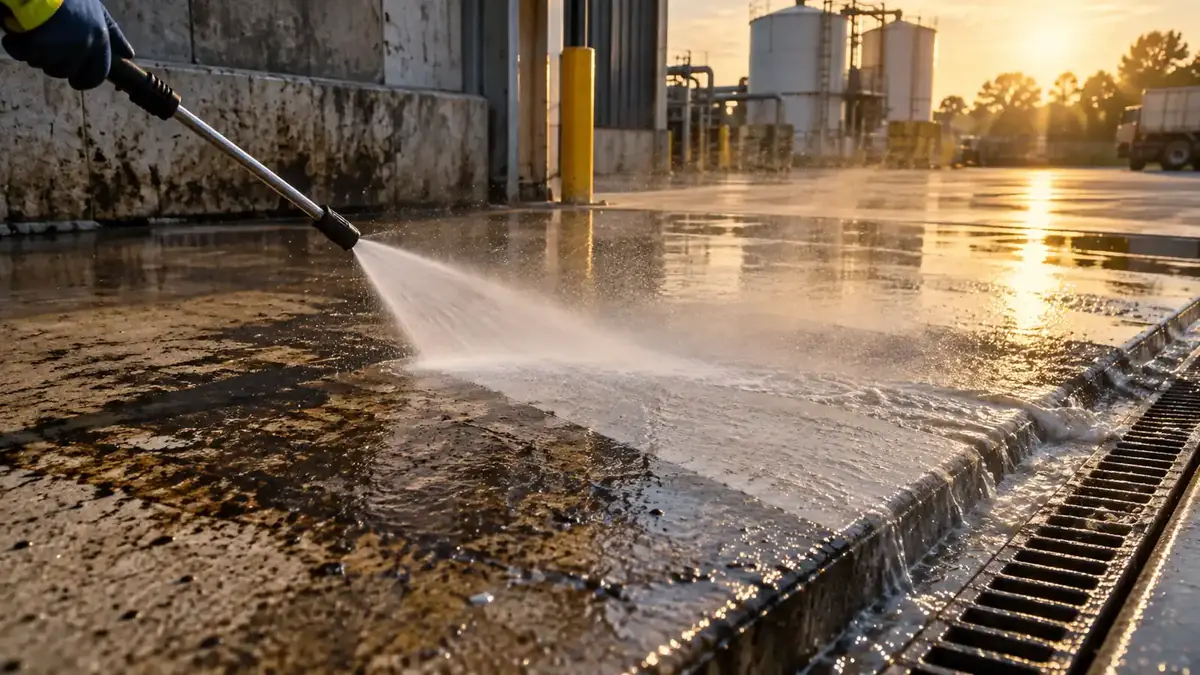
Our industrial pressure cleaning and hydro services lift grime, oil, tyre marks and algae from hardstands, dock aprons, wash bays and external walls on Melbourne industrial sites, with the dirty water captured instead of running into the nearest drain. They suit site managers getting ready for an audit, a lease end or a new tenant, and sites that simply need the yard back to bare concrete. Pressure work sits with our other warehouse and industrial services, and every job is assessed on site first.
Where the water goes is planned before a single drop is sprayed.
What we pressure clean
- YARDHardstand
- WASHWash bays
- WALLCladding
- DOCKAprons
- Water plan first, before any spraying
- Drains covered and bunded on the day
- Recovered water to sewer with consent or licensed disposal
- Hazardous spills referred, never washed away
What can industrial pressure cleaning be used on?
Industrial pressure cleaning suits hard, durable outdoor and wet-area surfaces: concrete hardstands, dock aprons, loading ramps, wash bays, bin bays and most external wall cladding. Pressure, water temperature and nozzle are set for each surface, not left at maximum.
More pressure is not always better. A worn concrete apron can be etched by a narrow jet held too close; painted cladding can be stripped. The table shows how we set up for the surfaces we see most on Melbourne sites.
| Surface | Typical soil | Set-up | Water plan |
|---|---|---|---|
| Concrete hardstand and yards | Oil, tyre marks, grit, algae | Rotary surface cleaner, hot water on oil | Drains covered, vacuum recovery |
| Dock aprons and ramps | Rubber, diesel drips, road dirt | Surface cleaner plus detail lance at edges | Bunded, recovered at the low point |
| Wash bays | Mud, grease, detergent film | Hot water, degreaser, pit cleaned out | To the bay's own treatment system |
| External wall cladding | Dust, mould, bird droppings | Low pressure with cleaner, soft wash | Collected at ground level where drains are near |
| Bin and compactor bays | Food waste, grease, odour | Hot water, sanitiser, hand scrub | Recovered, never to stormwater |
How are hardstands, aprons and docks cleaned?
With a rotary surface cleaner that keeps the jet enclosed and the spray down, hot water for oil, and a detail lance for edges, kerbs and joints. The dirty water is pushed to a low point and recovered as the work moves across the yard.
Hardstand is where most of the dirt on an industrial site ends up. Trucks drip, forklifts turn, and Melbourne's damp winters grow algae in the shade of every wall. Different marks need different treatment, and some never fully leave old concrete.
Fresh oil
Degreaser, dwell time, then hot-water surface cleaning. Usually lifts well.
Expect: mostly gone
Old oil
Soaked deep into porous concrete. Repeat treatments lighten it; a shadow often remains.
Expect: much lighter
Tyre and rubber
Rubber remover and heat. Turning circles and dock ramps take the longest.
Expect: mostly gone
Algae and moss
Pressure clean, then a treatment to slow regrowth in shaded, damp areas.
Expect: gone, returns over time
A test patch comes first on every stained area, so you can see the likely result before we commit to the whole yard. If old oil is only going to lighten, you know that at the start, not after the invoice.
Dock areas get extra care around levellers, seals and door tracks, where a jet can push water inside the building. We work those with lower pressure and a wet vacuum close by. Anything loose, such as damaged sealant or crumbling concrete edges, is noted rather than blasted away. Line marking in yards is treated gently too, because a close jet can lift paint that is already worn.
How are wash bays and external walls handled?
Wash bays are cleaned down to the pit and grates, with the silt trap emptied, so the bay drains and treats water properly again. External walls get a soft wash: low pressure and a suitable cleaner, rinsed top to bottom, to avoid damaging paint, seals or insulated panels.
A neglected wash bay slowly silts up until water pools and the treatment system stops doing its job.
Wash bay and wall checklist
- Silt trap and pit emptied and cleaned
- Grates lifted and flushed through
- Bay floor and walls degreased
- Cladding soft washed top to bottom
- Gutters and downpipes checked, not blasted
- Signage and windows kept clear of high pressure
Cleaning it out, including the silt trap and grates, is often cheaper than the problems a blocked bay causes. Solids from the trap are disposed of through a licensed waste contractor, not tipped onto the hardstand.
Walls are a different job. Many industrial buildings in the western and northern estates are clad in insulated sandwich panels, which a high-pressure jet can damage at the joints. We soft wash these, working from ground level or a lift, and keep pressure well away from seals, flashings and windows. Brick and concrete tilt-panel walls can take more, but are still tested on a small area first.
What equipment comes to a pressure cleaning job?
A hot and cold water pressure unit, rotary surface cleaners for flat areas, lances for edges and walls, drain covers and bunding, a vacuum recovery unit, and degreasers matched to the soil. Water tanks come too when the site has no suitable tap.
The surface cleaner does most of the work on hardstand. Its spinning jets sit under a hood, so spray and grit stay close to the ground instead of flying across the yard, and the finish is even rather than striped. Hot water matters for oil and grease: it breaks them down far faster than cold water and cuts the amount of chemical needed.
| Equipment | What it is for |
|---|---|
| Hot and cold pressure unit | Heat for oil and grease, cold for general dirt and walls |
| Rotary surface cleaner | Even, low-splash cleaning of large flat areas |
| Lances and soft-wash heads | Edges, kerbs, joints and wall cladding |
| Drain covers and bunds | Keep wash water out of stormwater pits |
| Vacuum recovery unit | Collect water at the low point as work moves |
How is wash water captured and kept legal?
It is contained before work starts, recovered as we go, and then discharged to sewer only where the site has the water retailer's consent, or taken away by a licensed liquid waste carrier. None of it goes to a stormwater pit.
EPA Victoria's stormwater guidance is clear that only rain belongs in stormwater drains. Sending wash water to sewer is a trade waste matter: South East Water, for example, says businesses need its consent before discharging trade waste. Your site may already hold that consent; if not, we arrange licensed disposal.
Plan
Drains, pits and low points marked on the walk-through. Disposal route agreed.
Contain
Drain covers and bunds placed before any water is sprayed.
Recover
Vacuum recovery at the low point as the clean moves across the area.
Settle
Solids settled out and bagged; oil caught where the load needs it.
Dispose
To sewer under the site's consent, or collected by a licensed carrier.
What spill residue can be pressure cleaned, and what cannot?
Everyday, non-hazardous residue can: oil drips, food and drink, mud, and the film left after a small spill has been cleaned up with a spill kit. Chemical spills, unknown liquids and anything leaking from a drum are not pressure cleaning jobs and are referred to a hazmat contractor.
Washing a chemical spill with a pressure cleaner spreads it, turns it into spray and sends it towards drains. The right order is always to contain it and have it assessed first. Once a specialist has dealt with the spill itself, we can clean the surface afterwards.
| Residue | Pressure clean? | What happens |
|---|---|---|
| Engine and hydraulic oil drips | Yes | Degrease, hot water, recover the water |
| Food, drink and packaging spills | Yes | Scrape, wash, recover |
| Residue after a spill kit clean-up | Yes, once the spill is dealt with | Final clean of the surface |
| Unknown liquids or leaking drums | No | Area left alone, hazmat contractor called |
| Fuel spills of any size | No | Contain with your spill kit, specialist response |
| Asbestos or contaminated debris | No | Work stops, licensed removalist |
If a yard needs clearing of rubbish and debris before it can be washed, the job starts as a site clean-up and clear-down, with pressure cleaning as the final stage.
How is the site kept safe while we pressure clean?
The work area is closed with barriers, vehicles are kept on the dry side, water is kept well away from power outlets and door motors, and wet surfaces are signed until they dry. Crews wear eye, hearing and foot protection throughout.
A pressure jet can injure skin and eyes, and a wet hardstand with forklifts on it is a slip and skid risk. We agree the sequence with your site lead so that trucks and forklifts can still reach the docks they need, and we work behind a moving barrier line rather than closing the whole yard. External power points, roller door motors and electrical cabinets are covered or avoided, and nothing is sprayed near an open switchboard.
- Exclusion zone set and moved with the work
- Vehicle routes agreed with your site lead
- Electrical points covered or kept dry
- Wet areas signed until dry
- Eye, ear and foot protection for the crew
- SWMS for the job, signed on arrival
When is the best time to book pressure cleaning?
In drier months where you can choose, on a day the yard can be closed in sections, and before an event that matters: an audit, a lease handover, a new tenant's inspection or a site visit by a customer.
Pressure cleaning in heavy rain dilutes the recovery and makes capture harder, so wet-weather days are rescheduled rather than pushed through. Busy yards are done in sections over a weekend or at night, with vehicle movements kept to the dry side of the barrier. For regular upkeep, a quarterly or six-monthly wash stops oil and algae building up to the point where a heavy clean is needed. Tell us any dates that matter, such as an audit or handover, and we work back from them.
How do you get pressure cleaning quoted?
Send the areas to be cleaned, their rough size, photos of the worst marks and where the nearest drains are. After a site visit we send a fixed price, with water capture and disposal shown as their own line.
Disposal is the part of the price that changes most from site to site. A yard with a consented trade waste point close by costs less to clean than one where every litre has to be collected and carted away. The rest of the cost factors are explained on our industrial cleaning price page.
Quote pressure cleaningHousekeeping around yards and docks is covered in our dust and housekeeping compliance guide, and our Melbourne warehouse cleaning service handles the inside of the building.
- Areas, rough size, photos and drain locations
- Site visit to plan containment and disposal
- Fixed price, with water handling shown separately
- Booked in sections around your vehicle movements
What should you know before booking industrial pressure cleaning?
Water, oil stains and spills come up on almost every enquiry.
Tell us about anything unusual in the yard, such as old tanks or stained ground, before the visit.