
The northern belt, market to Ring Road
Warehouse and Industrial Cleaning in Epping and Campbellfield
Warehouse cleaning in Epping and Campbellfield is for the north's mix of produce stores, new distribution centres and long-running metal and automotive shops. If you need industrial cleaning services near Epping, we plan the work around sites that often trade through the night, and we price it as a fixed program. This northern belt sits alongside five others on our overview of where we clean across Melbourne.
Most sites up here never fully close, so finding the quiet window is the first job.
Northern belt sites
- FRESHProduce
- DCNew builds
- FABMetalwork
- AUTOParts
What is warehouse cleaning in Epping and Campbellfield like?
Busy and early. Warehouse cleaning in Epping and Campbellfield takes in produce and cold storage businesses near the Melbourne Market, newer distribution centres along the Cooper Street corridor, and older factories and workshops beside the Hume Highway in Campbellfield.
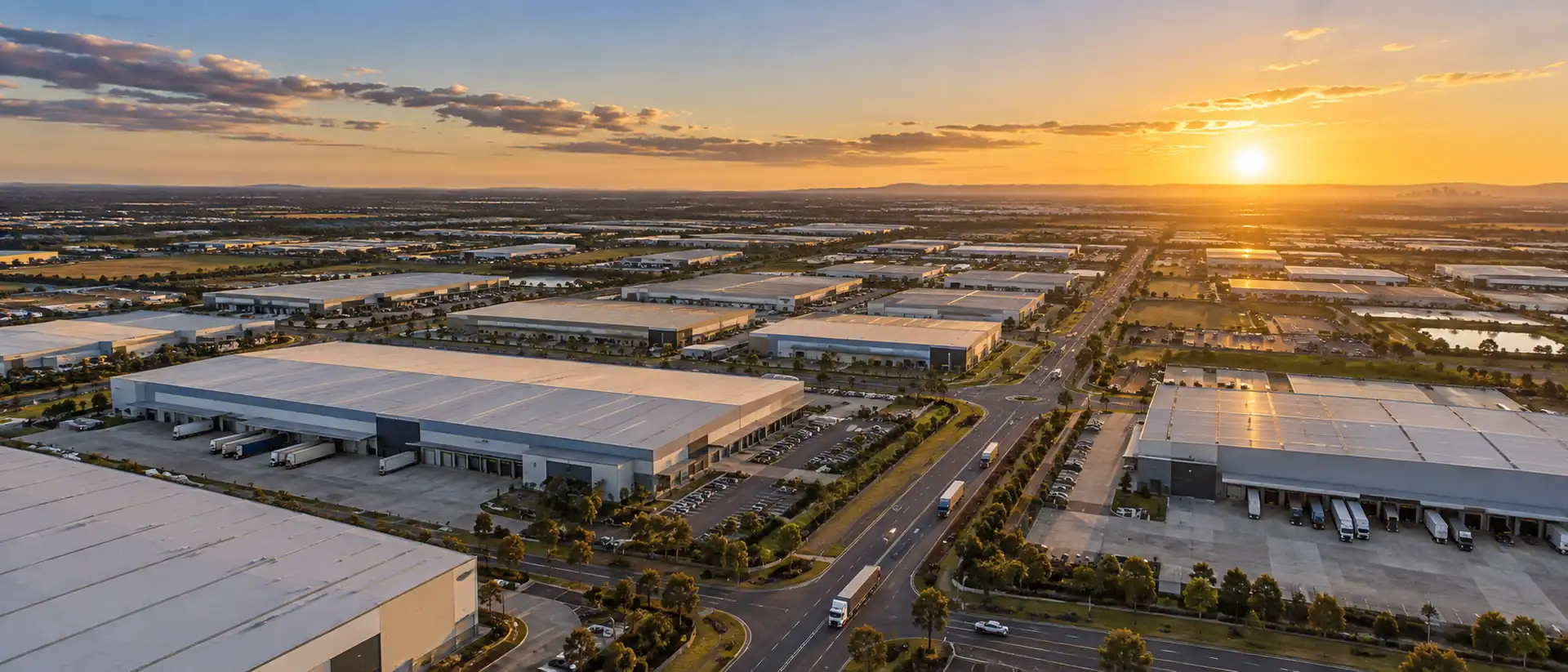
The belt runs from Epping and Thomastown in the east across to Campbellfield and Somerton in the west, with the Metropolitan Ring Road cutting through the middle and the Hume Freeway taking trucks north. It is two different places sharing a postcode map: new, large, high-bay buildings on one side, and decades-old industrial streets on the other.
The Melbourne Market in Epping pulls a whole supply chain in around it: ripeners, packers, cold stores and transport yards. Those businesses deal with fruit and vegetable waste, wet floors and chilled rooms every day, and they trade when most of the city is asleep. That changes how and when a cleaning crew can get in.
On the Campbellfield side, many buildings date from the years when car making anchored the area. Metal fabricators, parts suppliers and engineering shops still fill those streets, and their floors carry cutting oil, swarf and grinding dust rather than cardboard.
Which sites fill the northern estates, and how is each one cleaned?
Three groups: produce and cold storage, new distribution and third-party logistics centres, and metal and automotive workshops. Each one gets its own method, products and visit time, because a routine that suits one would fail in the others.
A cold store needs floors that stay dry and safe at low temperatures. A new DC needs long aisles scrubbed at speed. A fabrication shop needs oil and metal dust lifted, not pushed around.
Produce and cold storage
Stores, packers and ripening rooms linked to the market trade.
- Organic waste cleared and bins washed
- Dock aprons scrubbed and drained
- Chiller floors dried, not left wet
New distribution centres
Large, high-bay sheds with long aisles and many dock doors.
- Ride-on scrubbing of main aisles
- Pallet debris and wrap off the floor
- Amenities for big shift crews
Metal and parts workshops
Older factories doing cutting, welding, machining and parts supply.
- Cutting oil and coolant degreased
- Swarf and grinding dust collected
- Walkways and exits kept marked
When can a crew clean a site that trades through the night?
In the gap between the last dispatch and the next shift. For produce-linked stores that gap is often late morning into the afternoon; for DCs and workshops it is usually overnight or on the weekend. We find it with you before the quote is written.
The clock below is an example of a produce-linked store near the market. Your hours will differ; the point is that the clean fits into the site's day, not the other way round.
Trucks in, stock checked and sold. The floor is at its busiest and no one should be mopping it.
Orders go out early. Once the last truck leaves, the crew moves in on the docks, floors and waste area.
Amenities, offices and lighter tasks, working around staff preparing for the night.
The crew is gone and the floor is dry before the first trucks arrive.
Which services do northern sites book most?
Regular programs, distribution centre cleaning and heavy floor scrubbing. Sites here run hard every day, so most want a steady schedule that keeps floors safe and docks clear, rather than one big clean a year.
These three pages explain how each service runs in detail, with the same crews and equipment we bring to the north.
Distribution centres
Aisle scrubbing, dock and amenity work set around dispatch waves. Read our approach to cleaning logistics and distribution centres.
Scheduled programs
A written task list with frequencies and a monthly check. See how our ongoing industrial cleaning programs are set up.
Floor scrubbing
Degreasing and machine scrubbing for workshop and dock floors. Our warehouse floor scrubbing service covers the methods.
How are chiller floors and produce waste handled?
Carefully and dry. Water left on a cold room floor turns slippery fast, and rotting produce draws pests, so the crew removes organic waste first, cleans with as little water as the job allows and leaves chilled floors dry before the doors close.
Produce waste is heavy, wet and smelly, and it builds up in corners, under racking and around dock levellers. We clear it into the right bins, wash the bins and the bin area, and keep drains near the dock free of leaves and stalks. Where a site sends organic waste to a separate stream, we keep it separate.
Cold rooms need a plan agreed with your team. We ask which rooms can be opened, for how long, and who checks the temperature afterwards. Products go on shelving or out of the way before the floor is touched, and we use cleaning products that work at low temperatures rather than ones that leave a film.
Food safety cleaning inside packing and processing rooms is a separate, more detailed job with its own records. Tell us if your site handles open food, and we will talk through what applies before quoting.
- Organic waste cleared before any wet work
- Chiller floors left dry, not just mopped
- Door times agreed so rooms stay cold
How is access handled on northern estates?
Through the site's own rules. Newer DCs usually have gatehouses, online inductions and strict traffic plans, while older Campbellfield workshops often just need a key, an alarm code and a word with the owner. We follow whichever applies.
Either way, the crew carries SWMS for the tasks on the day, keeps out of forklift zones that are in use, and signs in and out. On sites with cold rooms, we agree who opens and closes the doors so temperatures are not affected.
- Gatehouse and online inductions done before day one
- Forklift zones worked only when closed off
- Cold room doors opened and shut by agreement
- Keys and codes for smaller workshops, held by named crew
- Waste areas cleaned to the site's bin and collection days
- SWMS for every task that needs one
How do you get an Epping or Campbellfield site quoted?
Send the address, floor area, type of site and your trading hours. We visit, find the cleaning window with you and return a fixed quote within 24 hours of that visit, with the task list, frequencies and SWMS attached.
Please include your trading hours, since up here they shape the whole plan. For how we arrive at the number, read our explanation of what drives warehouse cleaning prices, or go back to the main warehouse cleaning page for the full service list.
Get a northern belt quote- Address, floor area and trading hours
- Site visit to find the cleaning window
- Fixed quote with tasks and SWMS
- Program starts in the agreed window
What do northern site managers ask before booking?
Mostly about coverage, lead time and gatehouse rules.
If your site has cold rooms, mention it with the question.